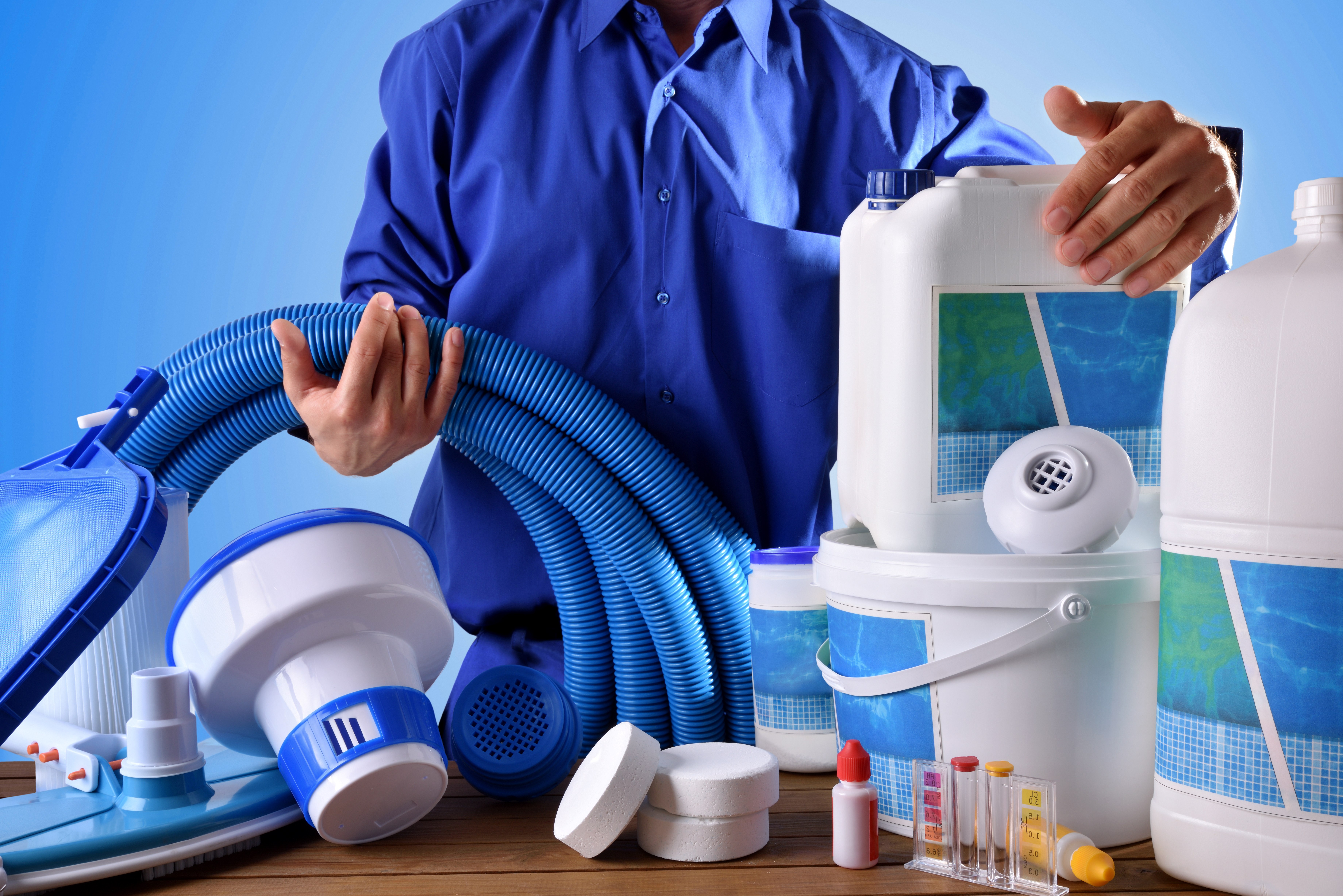
Winter closing has a lot of moving parts. Between choosing the right winter cover and picking the perfect chemical closing kit, it’s easy to overlook the chemicals you used during the summer. Properly storing your pool chemicals over the winter is crucial to ensuring you’ll be able to use them during the summer. Improperly stored chemicals can lead to chemical spills, leaks, and more.
Your chemical containers are designed to be nonreactive and keep your chemicals stable. As long as the lids are sealed and the containers have no noticeable dents, bulges, or holes, the original packaging is always the best way to store chemicals during the winter.
You should always inspect your chemical labels before storage. Ensure the labels are clear and intact so you know exactly what chemicals you’re dealing with. Keep in mind that many chemicals have different storage needs and may need to be stored in a different location.
When looking at most chemical containers, they may say to store them in a “cool and dry” place. In the case of winterization, cool and cold are very different words. Certain liquid chemicals, like liquid chlorine, should never be allowed to freeze completely. If possible, store chemicals like these in a temperature-controlled place or a place that never dips below freezing.
The second part of the saying on every chemical container, “dry”, is just as important as cool. Most chemicals will quickly degrade in the presence of moisture. Because of this, you may want to avoid storing your chemicals in the basement and opt for a garage or shed instead.
Some chemicals, like chlorine, aren’t built with completely sealed containers. This is to ensure the chlorine within can breathe and the air doesn’t get trapped in the container. Because of this, though, chlorine gases can get trapped in the space they’re left in.
Before shutting away your chemicals, ensure there’s enough ventilation so that the gas doesn’t build up.
After your chemicals are safely stored, it’s tempting to shut the door and ignore them until next spring. Instead, make sure to check on your chemicals at least once a month. This is to ensure none of your products have leaked and remain in the same condition put them away in.
Even if you have the best containers and the ideal storage conditions, it’s essential to keep your chemicals separated. Keep liquids away from solid chemicals and make sure no different chemicals are stacked together.
Avoid storing chlorine with your cleaners, especially ones that contain acids or alkalines. You’ll also want to avoid storing them near metal objects, as these products can easily make metals rust. So if you choose to store your chemicals in the garage, avoid storing them near bikes or metal gardening tools.
For more information about general pool chemical storage, check out our Ultimate Guide to Storing Pool Chemicals.


