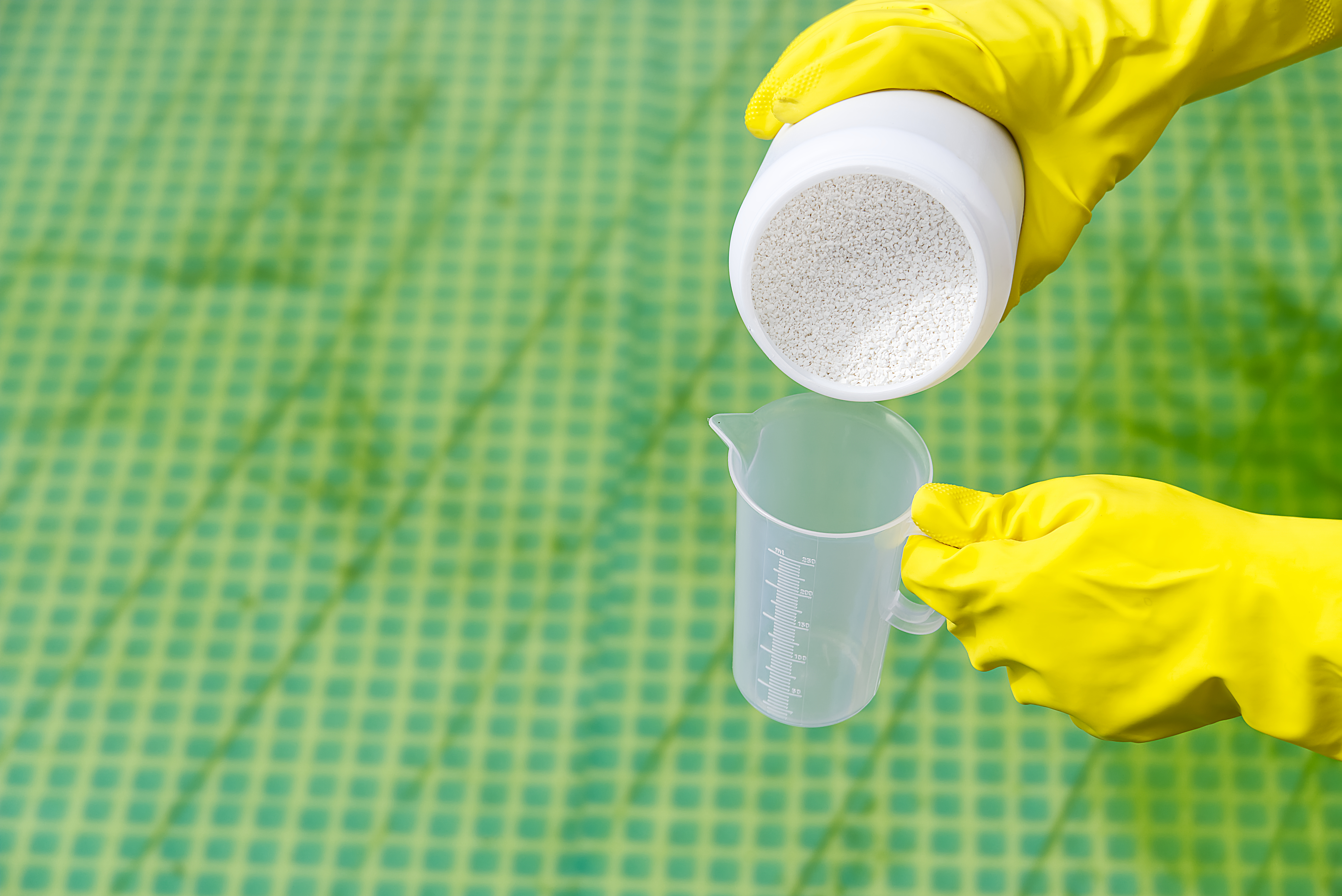
Sodium dichloro-s-triazinetrione pool chlorine, more commonly known as “Dichlor”, is a fast-dissolving, stabilized pool sanitizer that is used to kill bacteria, algae, and other contaminants in swimming pools and spas.
Dichlor pool chlorine is typically granular and has an available chlorine level of 55 - 62%, with added cyanuric acid (or CYA). CYA is a stabilizer that protects chlorine from UV breakdown, meaning dichlor can be considered “stabilized chlorine”.
Dichlor is often used as a weekly shock treatment,or to treat algae issues in saltwater pools. It won’t cause scale build-up, and has a nearly neutral pH. Another bonus is that, because it’s stabilized, you can add it during the day, but you’ll still need to wait at least 8 hours before you swim.
It can also be used in your daily pool maintenance as granular chlorine, helping to maintain your chlorine levels throughout the season. Dichlor is a popular choice for spa owners as Dichlor dissolves quickly, but doesn’t deplete as fast as other chlorine types at high heat levels.
The easy answer to this is that you should keep your free chlorine levels in your pool between 1 and 3 PPM, or 2 and 4 PPM in your spa or hot tub. Your chlorine levels will fluctuate due to a large number of factors, including debris, rain, heavy bathing loads, and even just the amount of sunlight.
It’s vital to test your water regularly so you can tell how much chlorine you’ll need to add to replenish your levels to 3 PPM. Check out our blog How To Balance Pool Water for a guide on how to test your pool water.
Dichlor comes as granules, meaning that it does need to be added by hand. However, this also gives you greater control over how much you are adding, and when you are adding it. It can be added by casting it across the surface of your pool, or sprinkling it around the perimeter.
Dichlor shock is ideal for boosting sanitizer levels and fighting algae in saltwater pools and spas. It releases quickly, and maintains the free chlorine and CYA levels in the pool simultaneously. Dichlor allows you to raise your free chlorine and CYA levels at once, and can just be added straight to the water with no mixing required.
It’s not uncommon for your pool water to be slightly cloudy after shocking with a granular chlorine. Most cloudy water will clear up within an hour or two after adding your shock, but if you still can’t see the bottom of your pool after 24 hours, there may be some underlying problems. Check out our blog Why Is My Swimming Pool Cloudy for other reasons that your pool may be cloudy.
Whenever you add any kind of chlorine to your pool, you want to ensure that it’s returned to a safe level before you swim. Run your pump and filter so there aren’t any concentrated areas of chlorine and then test your water after a few hours and wait until your chlorine levels are in range.
Dichlor is very stable, but it will expire. When it’s stored properly in a cool, dry, and dark place it typically lasts about 3 to 5 years. If it’s exposed to moisture, humidity, or extreme heat then it can degrade much faster.
Dichlor is generally considered safe for vinyl liners, particularly because it’s fast-dissolving and pH-neutral, which prevents it from sitting on the liner and causing bleach spots or damage.
It’s important that you never mix different types of dry chlorine together, as they can cause a dangerous chemical fire, explosion, or a release of toxic fumes. When shocking the pool, never add your chlorine through the skimmer, especially if you have an inline or offline chlorine tablet feeder. If you’re using a floating tablet dispenser, pour the shock far away from the dispenser or remove it from the pool entirely until the shock has ample time to distribute.
Dichlor (short for sodium dichloro-s-triazinetrione) is a stabilized chlorine sanitizer used to disinfect pool and spa water. It contains chlorine and cyanuric acid (CYA), which helps to protect chlorine from sunlight degradation.
Dichlor is typically used for shocking or quick chlorination, while trichlor is often used in floaters or feeders for ongoing sanitation.
Yes. Because Dichlor is stabilized, every dose adds CYA to the water. Over time, this can cause CYA levels to rise too high, reducing chlorine effectiveness.
Yes, but sparingly. It can be used for shocking a saltwater pool, but routine use may cause CYA levels to climb too high.
Yes. When broadcast properly, Dichlor is safe for vinyl liners. However, dumping undissolved granules directly onto the liner can cause bleaching.
Typically, 1 pound of chlorine raises the chlorine by about 6 - 7 ppm in 10,000 gallons of water, but always follow the product label.
Yes. Dichlor is commonly used as a chlorine shock because it dissolves quickly and raises chlorine levels fast.
Dichlor is close to pH neutral (around 6 - 7 when dissolved), so it has a minimal impact on pH compared to trichlor or cal hypo shock.
Yes. Dichlor is very popular for spas because it dissolves quickly and is gentler on equipment.
Avoid or limit using Dichlor if your CYA level is already above 50 - 60 ppm, you’re trying to lower stabilizer levels, or you need unstabilized chlorine.


