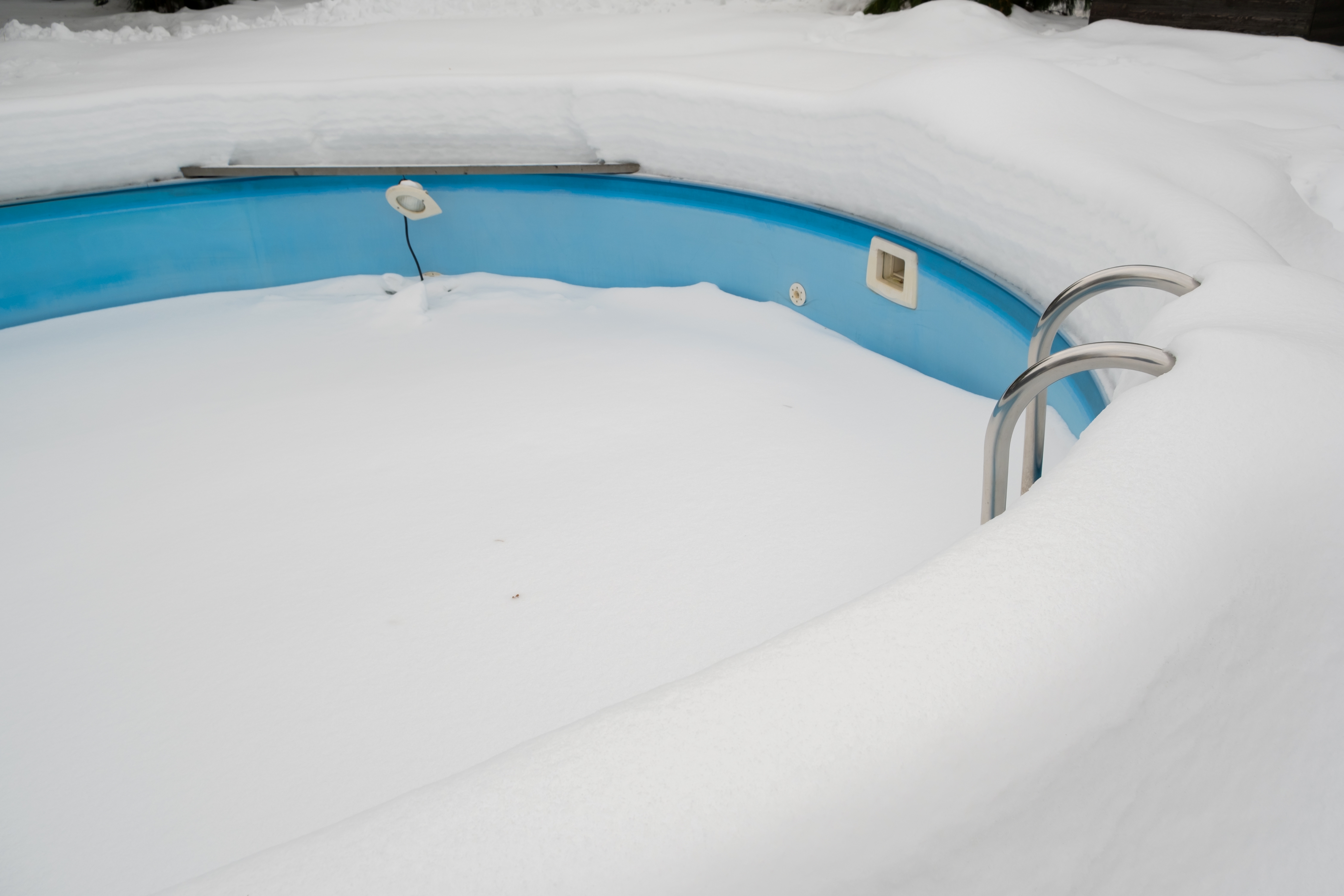
Winter storms can be tough on pools, especially in areas that don’t usually see extreme cold. Heavy snow, ice, freezing temperatures, and power outages can all lead to cracked pipes, damaged equipment, torn covers, and costly repairs.
After the severe cold weather this winter, we went to our resident pool experts with some of your top asked questions to find out how to deal with the fallout of this year's winter storms. Whether your pool is open or closed for the winter, read on for some tips and tricks that’ll save you time and trouble.
When the temperatures drop below freezing, water expands. That expansion can crack pipes, fittings, skimmers, and even your pool structure if you don’t take precautions. Even if your pool is closed, heavy snow and ice add weight to pool covers, increasing the risk of sagging, tearing, and pulling anchors.
Winter storms can also bring strong winds that can loosen your winter cover or shift accessories, while power outages may shut down your circulation system and allow the standing water in your pool to freeze. Even after the storm has passed, melting snow and debris can contaminate pool water and unbalance your chemicals.
If you live in a climate that’s prone to poor winter conditions, you’ve probably already winterized your pool in preparation for the colder weather. However, in the case of extraordinary winter storms you may want to do a little extra work in order to ensure your pool is fully prepared.
Check around your pool cover to ensure all of your water bags, anchors, and cables are secure. Refill any water bags that have lost water, or tighten any safety straps. Ensuring that your cover is well secured helps protect your pool from debris, snow-load, and wind damage. Use a pool brush to remove any debris from the cover, and remove any excess water or melted snow with a pool cover pump.
If you have a mesh winter pool cover, remove your skimmer plug so water can enter the skimmer and drain out instead of filling your pool completely. For solid safety cover, keep the plug in so your water remains at its normal height to support the cover. Check that there’s water in your skimmer and all of your freeze protections are in place.
If you already blew out your plumbing lines when you winterize your pool, then your plumbing equipment should be in good shape. If you haven’t, our winterizing blogs can teach you how to blow out your lines.
Although there isn’t a large amount of balancing you can do during the winter as your plumbing is turned off (and therefore not circulating water), it can be valuable to add chlorine free shock or pool algaecide to get a head start fighting off any contaminants that can be added during the winter storm.
If you live in an area where you’re used to keeping your pool open throughout the year, then there’s a little more work required to prepare for a winter storm.
Balancing a pool before the storm hits can help to maximize your chemical efficiency to destroy any contaminants that are introduced.
Check out our blog on How To Balance Pool Water for a full guide on what your optimum water chemistry should be.
Clean and brush your pool, removing any dirt, leaves, twigs, and more that has made its way into your pool. This helps to prevent the accumulation of debris that may clog your filters, or create a harder cleanup after the storm.
Secure all of your pool accessories such as toys, ladders, slides, or skimmer lids (many skimmer lids can be screwed down to secure them during the winter) in a safe place where they won’t be damaged by the storm. This will also reduce the chance of them being thrown around during heavy winds. Check any landscaping around your pool for branches and tree limbs that may become issues and deal with them before the storm hits.
To avoid frozen, cracked pipes, run your pump before, during, and after the storm to promote water circulation, as moving water won’t freeze as quickly as standing water.
Question: “Should I keep my pool cover on or off?”
Answer: If your cover is in place, and in good condition, then it’s best to leave it on. However, if you notice damage to the cover, or are unable to attach it around the pool, then you may want to remove it until the weather clears up again to assess any issues.
Question: “Can I just wrap my pipes in blankets or pool noodles?”
Answer: This can be a good short-term fix if you aren’t facing a long-term or deep freeze, as they provide minimal insulation.
Question: “Should I run my heater to keep my pipes from freezing?”
Answer: Yes! If you have a pool heating system, you can turn it on low as long as the pool pump is running. This can work as a good fix until the freezing temperatures have passed.
Question: “There’s a freeze warning in my area, what can I do to prevent my pipes from freezing?”
Answer: One option is to open the pool line from the pump and add RV antifreeze. You can also try blowing the lines out and plugging them. Check out our pool closing blogs for How To Blow Out Your Lines.
When a winter storm hits, safety should always be your first priority. Avoid any unnecessary interaction with your pool while the storm is ongoing, and follow any local guidelines.
Don’t walk on frozen pool covers, as this is both dangerous and may damage the cover. Avoid chipping or breaking the ice on your pool as it may damage your pool or the liner. If your pool is open and you still have power, keep water circulating while the temperatures are near freezing as moving water freezes much slower than still water.
Question: “What should I do if the power goes out?”
Answer: If you’ve lost power to your pool pump, you may want to disconnect the pool pipes from the filter to allow the water in them to flow back into the pool. You can then try adding an RV Antifreeze in the lines where you can to help prevent them from freezing.
Question: “If the power comes back on, will my pump burn out if I’ve pulled out the plugs?”
Answer: If you removed any drain plugs from the filter or pool pump, then it’s best practice to turn your pump off so it cannot turn back on without you replacing the plugs.
Question: “Should I break the ice on the surface of my pool?”
Answer: No! Trying to break up the ice on the top of your pool could damage both your liner and the structure of your pool.
Carefully inspect your pool for any signs of damage, making sure that you put your safety first in any icy conditions. Check your pool cover for any tears, rips, or movement and examine the pool structure itself for any visible cracks or leaks. Keep an eye out for any debris that may have entered the pool during the storm.
Check your cover for any loose anchors or straps, shifted bags, or moved weights. Addressing these small issues early can help to prevent them from becoming bigger problems in the future.
Remove any foreign objects from the pool and cover that have fallen during the storm. You can use a skimmer net for larger debris, or a vacuum for smaller debris.
Use a soft pool brush to remove excess snow and a cover pump to remove any standing water. Don’t use any sharp tools as they can damage your cover or liners. Never try to heat up and melt ice, as this may damage your cover.
Test and balance your pool, as snowmelt and debris can both affect your water chemistry. Test the water and adjust chemicals as needed to maintain proper sanitation. For the proper levels you should have in your pool, check out our blog How To Balance Pool Water.
Inspect your pump, filter, heater, and any exposed plumbing for cracks or leaks. If your equipment appears frozen, allow it to thaw naturally before restarting to prevent further damage. Replace or repair any damaged components to prevent further issues.
Question: “My solid cover is covered in snow - should I try and remove some of the weight?”
Answer: Generally, the pool cover is supported by the water in the pool. However, if you did want to try and remove some of the weight just be careful you don’t damage your winter cover. You’ll want to remove as much water from your cover as you can once the snow and ice melts with a Cover Pump.
Question: “The water level is dropping, is that the sign of a leak?”
Answer: After an ice or snow storm, if your pool is losing water this could be a sign of storm damage. You'll want to take a good look around your pool to rectify the issue as best as you can to stop any further damage to your pool or your property. Check out our Leak Repair Kit for help finding and repairing small leaks.
Question: “I can see a small hairline crack in my pump lid/filter. Can I just epoxy it?
Answer: This may be a good short-term solution, but would not be a long-term fix. You’ll want to replace the part to keep your pump working as intended.
Do you have any further questions, or any issues you need an expert opinion on? Our pool experts are available Monday through Saturday to answer any of your questions or help with any concerns. Give us a call at 1.800.356.3025!


