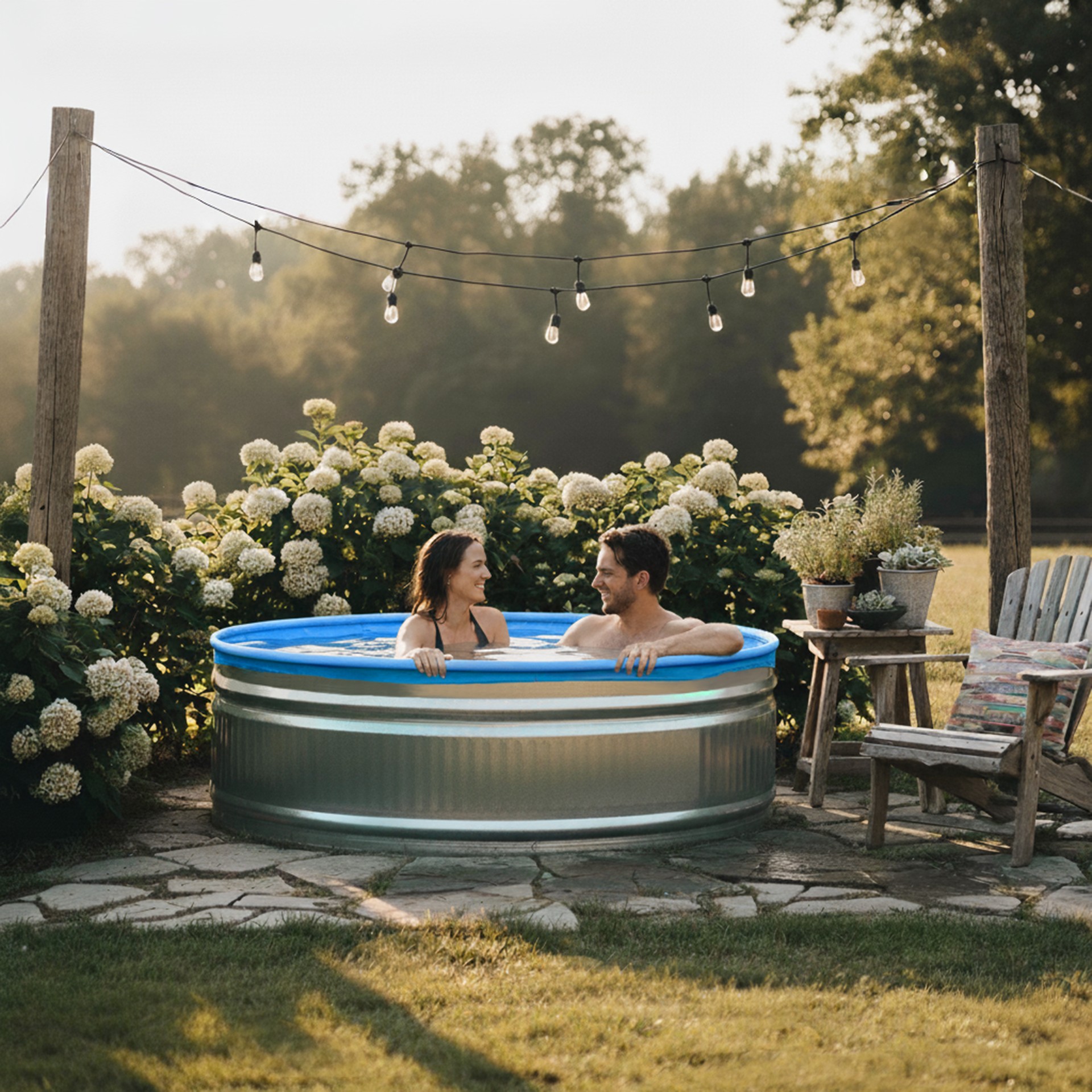
Stock tank pools are a popular way to enjoy nearly all the perks of a pool without the commitment. Stock tank pools are ideal for people with limited space or anyone looking for a quick spot to cool off. While they're rarely permanent structures, a stock tank can last for years if properly set up and cared for.
There are many different ways to set up your own stock tank pool, but it's easy to get down to the basics.
Stock tanks come in many different shapes and sizes that can fit what you're looking for. These tanks generally come in plastic or galvanized steel, with steel being the preferred material. Steel tanks are often more durable, easier to paint, and match many different backyard styles.
While the shape and length are often different, the height of stock tanks is often the same. As they are intended as cattle water troughs, these large tubs of water are usually only between 1' and 2'4" tall. They may not be the best choice if you're looking to swim or dive, but they're perfect for lounging and cooling off.
The most popular size and style of stock tank is a 8' galvanized steel tank, perfect to fit a pool float and enjoy some relaxation.
Stock tanks don't require a lot of space, but they need a stable, flat area to function properly. A flatter section of your driveway or a garage is a great spot for your new pool. You can also clear and flatten an area of your backyard to create a place for your stock tank.
As stock tanks are shallow water pools, they often heat quickly. If you're looking for a cooler dip, place your stock tank in a shaded area. You can also use an umbrella to ensure your stock tank gets just the right amount of exposure.
As stock tanks are intended for use with water, they often don't need any additional attention to turn them into the perfect pool. But, to make your stock tank safe to swim in and to last more than just one season, it's recommended that you paint your pool or use a liner.
Above ground pool paint on the outside of your pool stops your stock tank from rusting and can help seal tiny holes you may not be able to see. Always use the paint in a well-ventilated area or with proper protective equipment.
For extra protection, many choose a swimming pool liner to protect their stock tank. Pick a liner that matches the diameter of your stock tank. A popular choice for 8' round liners comes from our trusted brand, SmartLine®. As these liners are meant for above ground pools, you can either cut them to fit with enough overhang to keep them taut.
For extra comfort and protection, you can install wall foam between your liner and the steel walls. For a cleaner look, cut a pool noodle and place it over the top rim of your tank. The noodle will also help secure the liner to your pool and provide some additional comfort.
While a pool filter isn't required, it can keep your stock tank water safe and clean. Since stock tanks are smaller, they won't require a large, high-powered pool filter. Instead, opt for a smaller sand filter or cartridge filter. For a more powerful, reliable punch, you can use a slightly larger filter.
Drill two holes on the sides of your tank, cutting a hole in your liner in the same position as the holes. You must do this before installing the liner. Install the filter pumping through one hole and use a healthy amount of pumper's putty or acrylic sealant to ensure a waterproof connection. Then, do the same with a return fitting.
After your assembly is complete, fill your pool. 8' steel stock tanks require around 700 gallons of water, with larger 10' stock tanks using around 1,100 gallons. Give your filter a test run and check around your new pool for any leaks.
When your tank is filled, it's time to think about chemicals.
Chlorine is a popular choice and provides a variety of styles and options. Most people use liquid chlorine, while others opt for a chlorine floater to effectively distribute the chlorine throughout the water. Smaller, 1" chlorine tablets for use in spas work great in stock tank pools. For regular use with a few bathers, toss in enough to ensure your free chlorine levels are between 1 - 3 ppm.
Test your water often, especially after treating with chlorine, using testing strips. Too much chlorine can damage both the liner and the stock tank, while too little won't sanitize your pool water.
Now that your stock tank is completely set up, it's time to enjoy your new pool. To add an extra touch, many choose to add a deck around their stock tank, ideal for towels, drinks, and more. Pool lights can also be used to enjoy a late-night swim.
If you opted to add a pool filter, you can also add a fountain or waterfall.
Most stock tank pools should be big enough to enjoy floating on at least one float. You can also ensure your pool is the ideal temperature with a floating thermometer.
Stock tank pools are easy to clean and maintain. With their limited space, stock tank pools can be easily skimmed with a leaf skimmer. Instead of a standard pool vacuum, you can use a smaller vacuum broom to clean the bottom of your stock tank and ensure you get the most out of your pool.
To reduce the amount of maintenance you need to do in the long run, and warm your pool, use a solar cover. Solar covers can raise the temperature of your water a few degrees while also keeping out regular dirt and debris.
For a more detailed look at everything we offer for your next DIY project, visit our stock tank pool products page.


