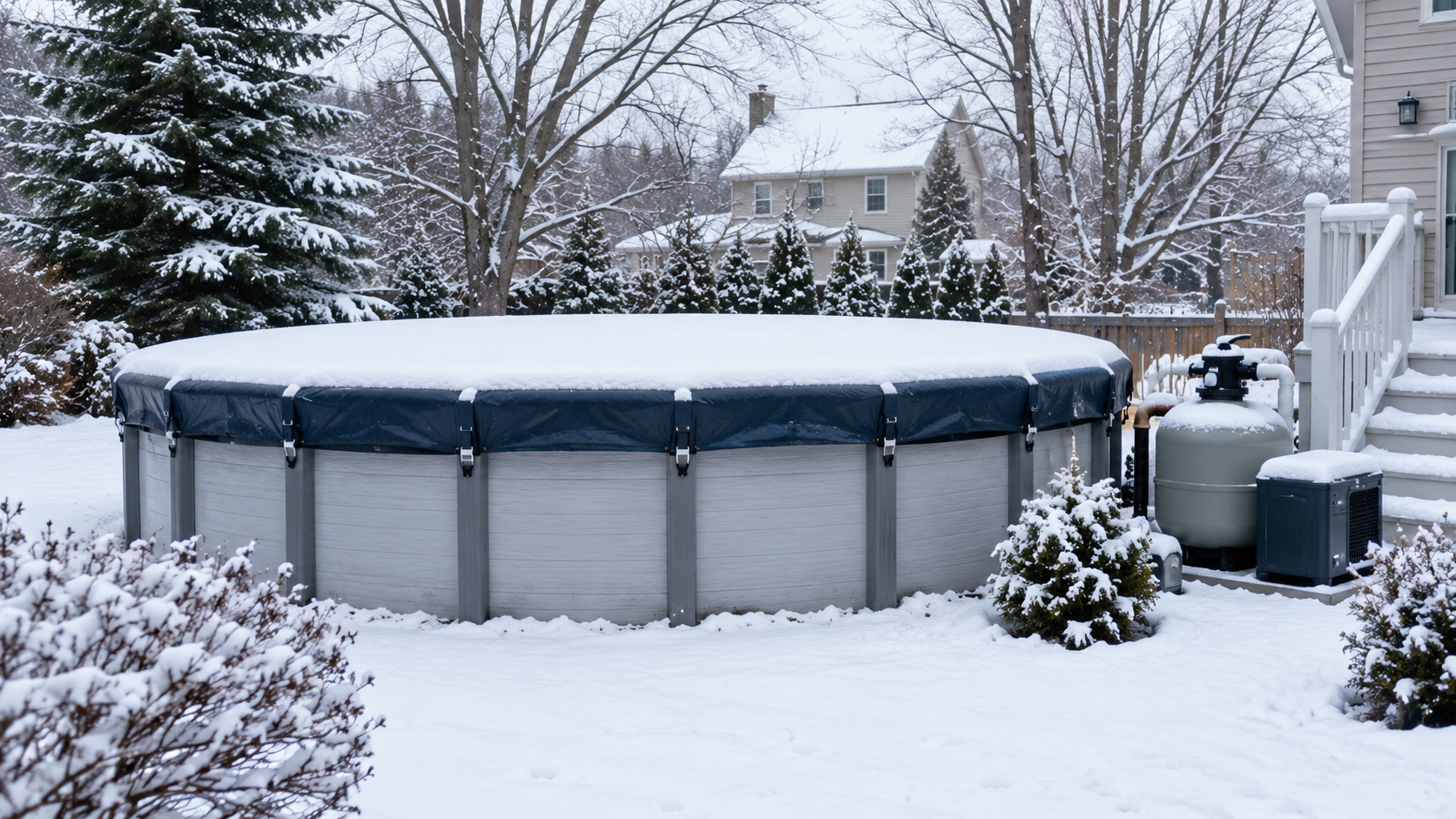
Winterizing your pool properly allows you to prevent freeze damage to your pool, and look forward to a clean and clear pool in the spring.
An uncovered pool will accumulate debris, contaminants, and algae. Not only is your pool equipment susceptible to damage, but the pool walls are also at risk of collapsing.
Skipping or rushing through closing your pool can lead to costly problems, such as cracked plumbing, damaged equipment, or algae growth. Taking the time to close your pool correctl can help to:
To close an above ground pool for winter, clean the pool, balance the water chemistry, shock the water, add winterizing chemicals, disconnect and drain the pool's plumbing and equipment, winterize the skimmer, lower the water level if required, remove the pool accessories, install an air pillow if recommended for your pool, and secure a properly fitted winter pool cover. Never completely drain an above ground pool unless the manufacturer specifically instructs you to do so.
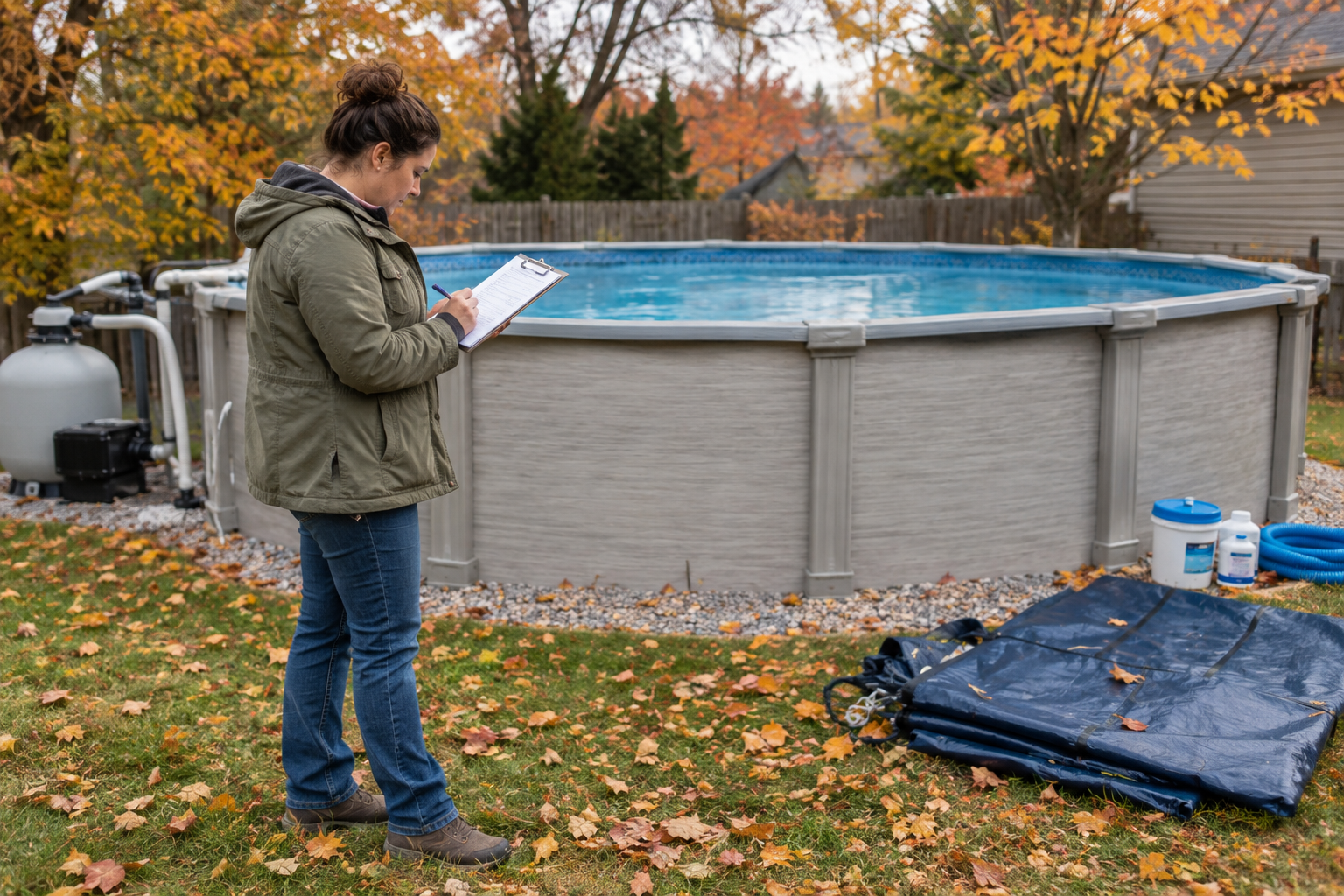
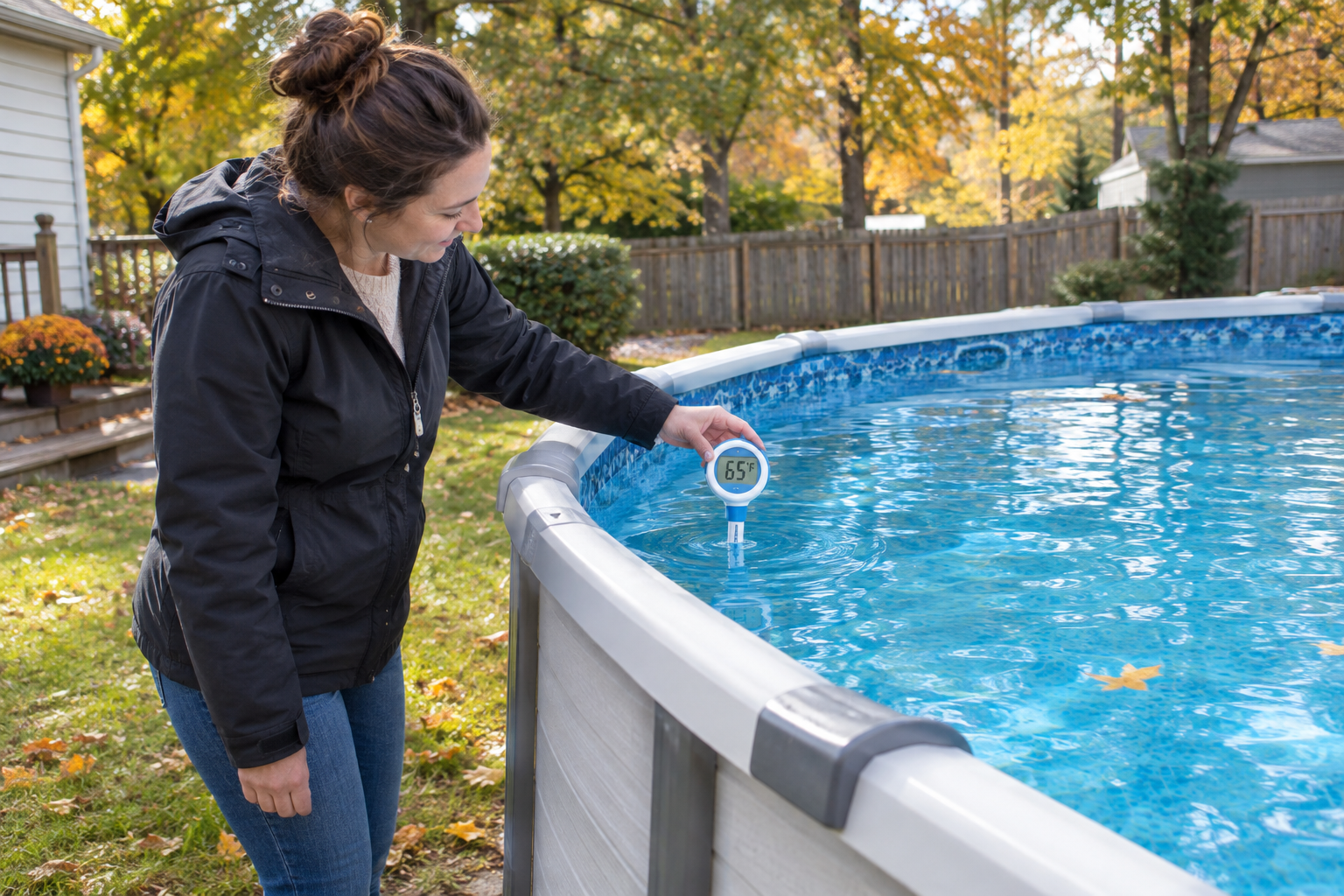
The best time to close an above ground pool depends on your climate and the weather forecast. In areas with freezing winters, many pool owners begin to close their pools when the water temperature consistently drops to around 60°F - 65°F.
Don't rely on a specific calendar date, either. Closing too early can give algae more opportunity to grow while the water remains warm, while waiting too long can leave your pool vulnerable to freezing temperatures.
Plan to finish winterizing your pool before sustained freezing arrive. If your area experiences occasional freezing weather rather than a full winter freeze, follow your pool and equipment manufacturer's recommendations for winterization.
Being prepared is a vital part of any smooth-running operation. Make sure that you have all the necessary supplies before you winterize your pool. The exact list of what you need may vary depending on where you live and the conditions of your pool, but here's a good start:
OR
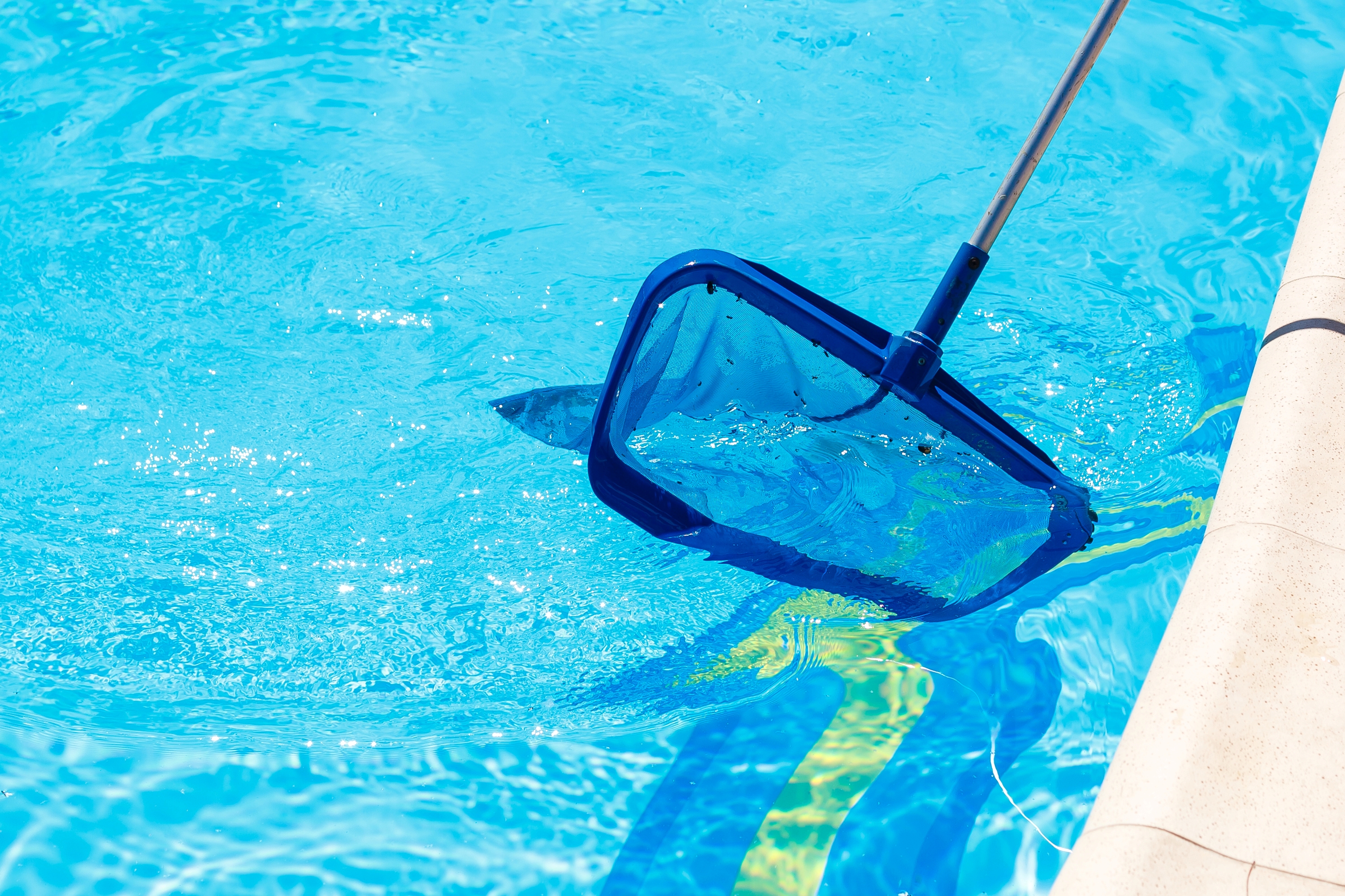
Cleaning your pool is essential throughout the season, but the final clean before closing the pool is critical. You will need to skim the surface, brush down all of the walls, and then vacuum the entire pool.
A little preparation now can save you a lot of time and effort when you open your pool next spring. A clean pool also makes it easier to balance your water properly in the next step.
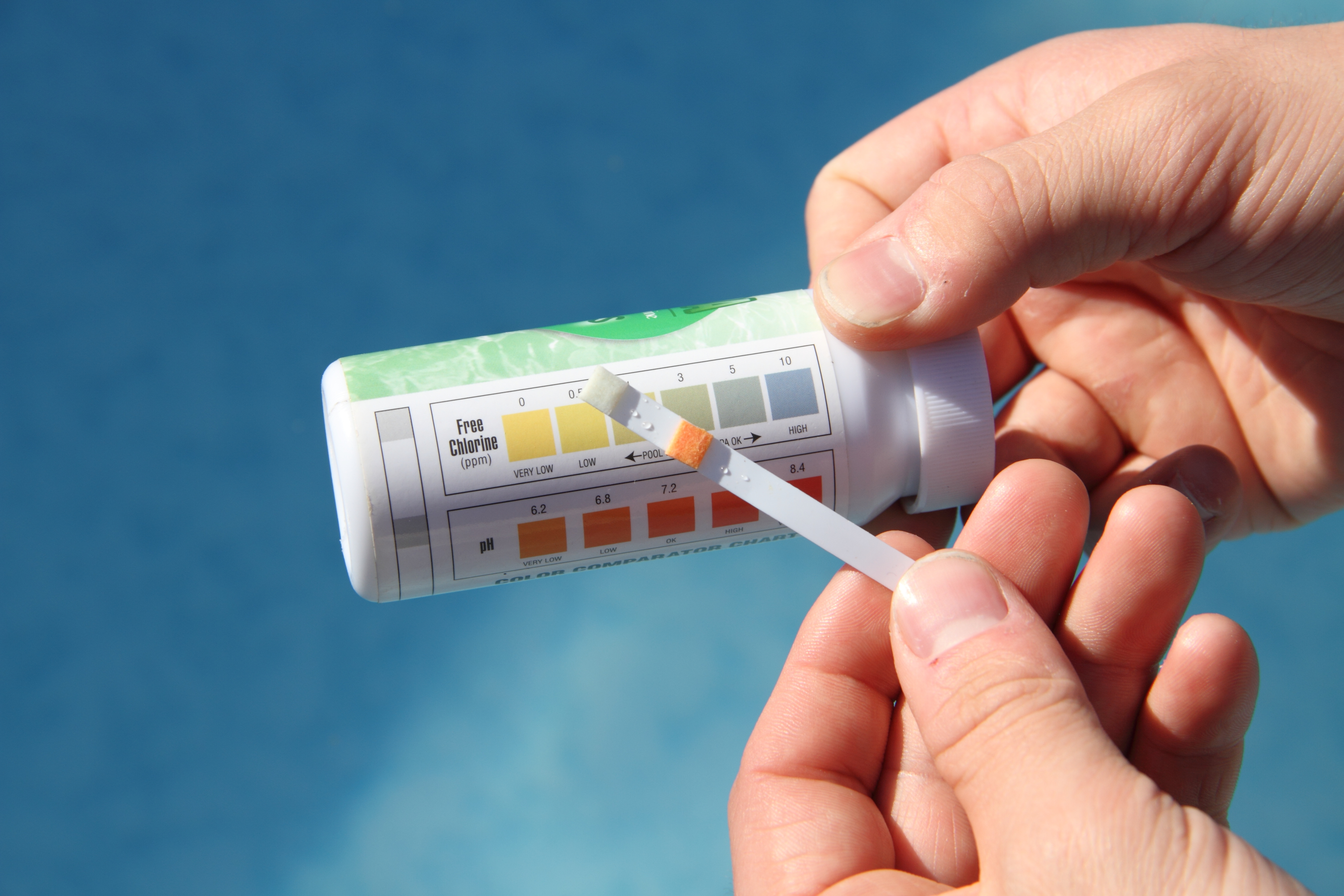
It's essential to test the levels in your pool (pH, alkalinity, etc.) to ensure that the water is balanced before closing. This is to protect the pool from corrosion and scale buildup that is liable to occur when your pool is closed.
Your water should be within the following ranges:
For more help on balancing your pool, check out our blog How To Balance Pool Water.
You'll be shocking your pool in the next step, so you don't need to worry about your chlorine levels just yet.
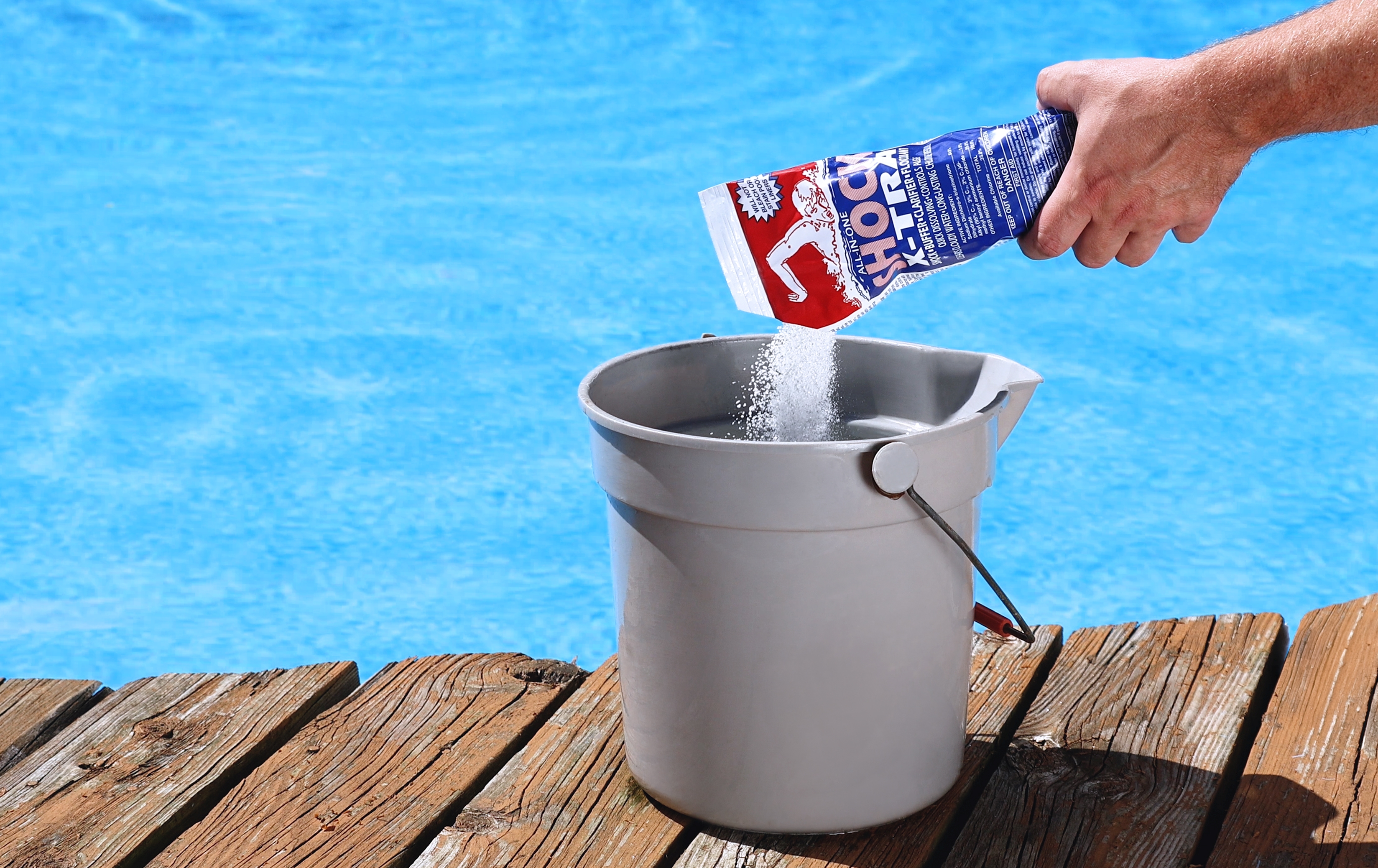
Give your pool one final shock treatment before closing it. Follow the shock product's label instructions for the correct dosage based on your pool's water volume and condition.
If your pool is clean, cloudy, or showing signs of algae, address the water-quality problem before closing the pool. Do not simply increase the chemical dosage beyond the manufacturer's instructions.
After shocking, allow the water to circulate according to the product's directions and wait until the chlorine level is appropriate for the next stage of your winterization process.
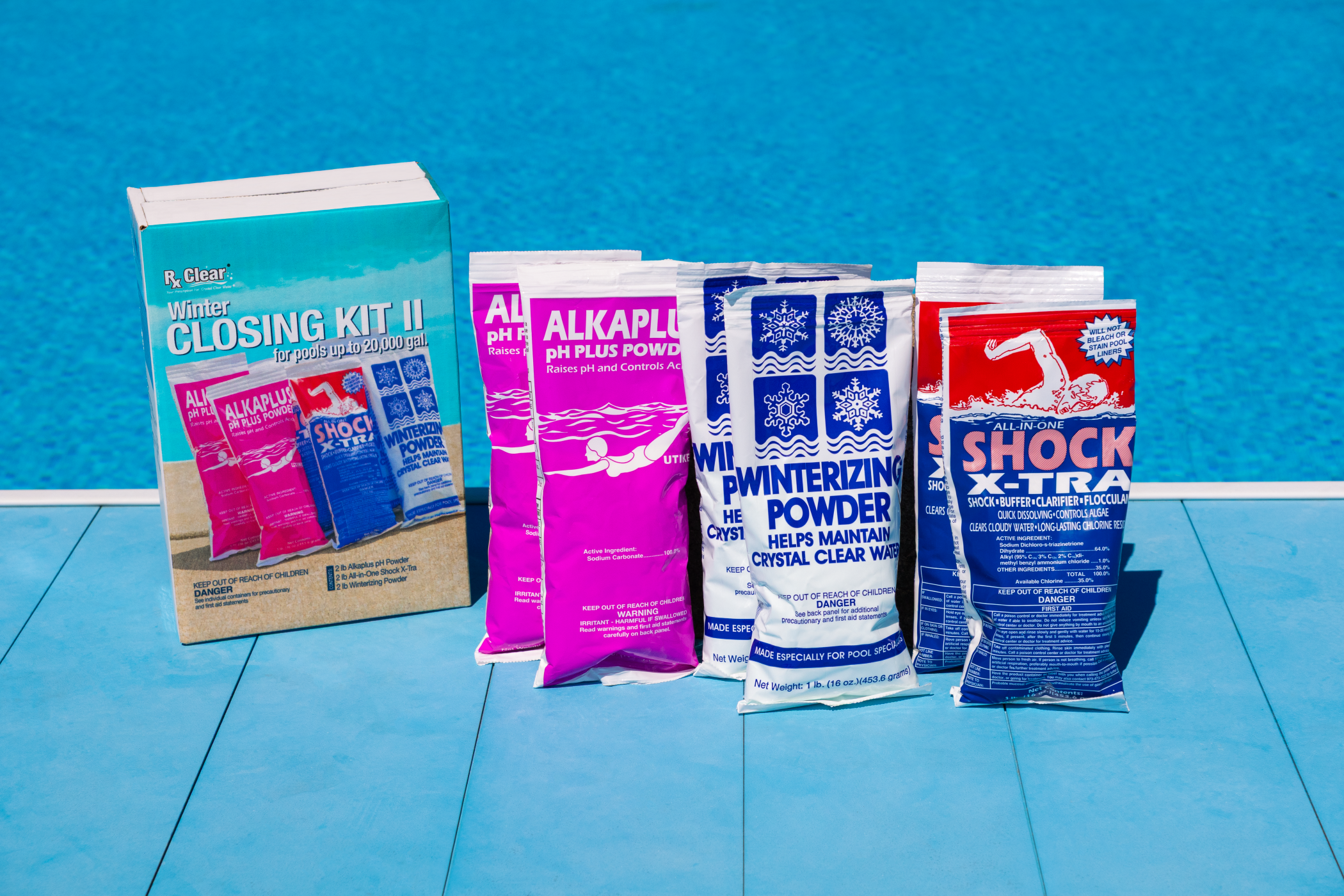
Once all the levels have returned to normal after shocking your pool, it's time to add your winterizing chemicals. This includes a winter algaecide, and if you live in an area with high metal content, consider a stain and scale preventer as well.
A winter algaecide will prevent the growth of algae spores throughout the off-season. If your cover is mesh, has a mesh panel, or otherwise allows dirt and debris to enter the water through the winter, then use a double dose of algaecide.
If you live in an area with water that has a high concentration of metals, add a stain and scale preventer when closing the pool, so the metals can't settle onto your pool surfaces and eventually cause stains.
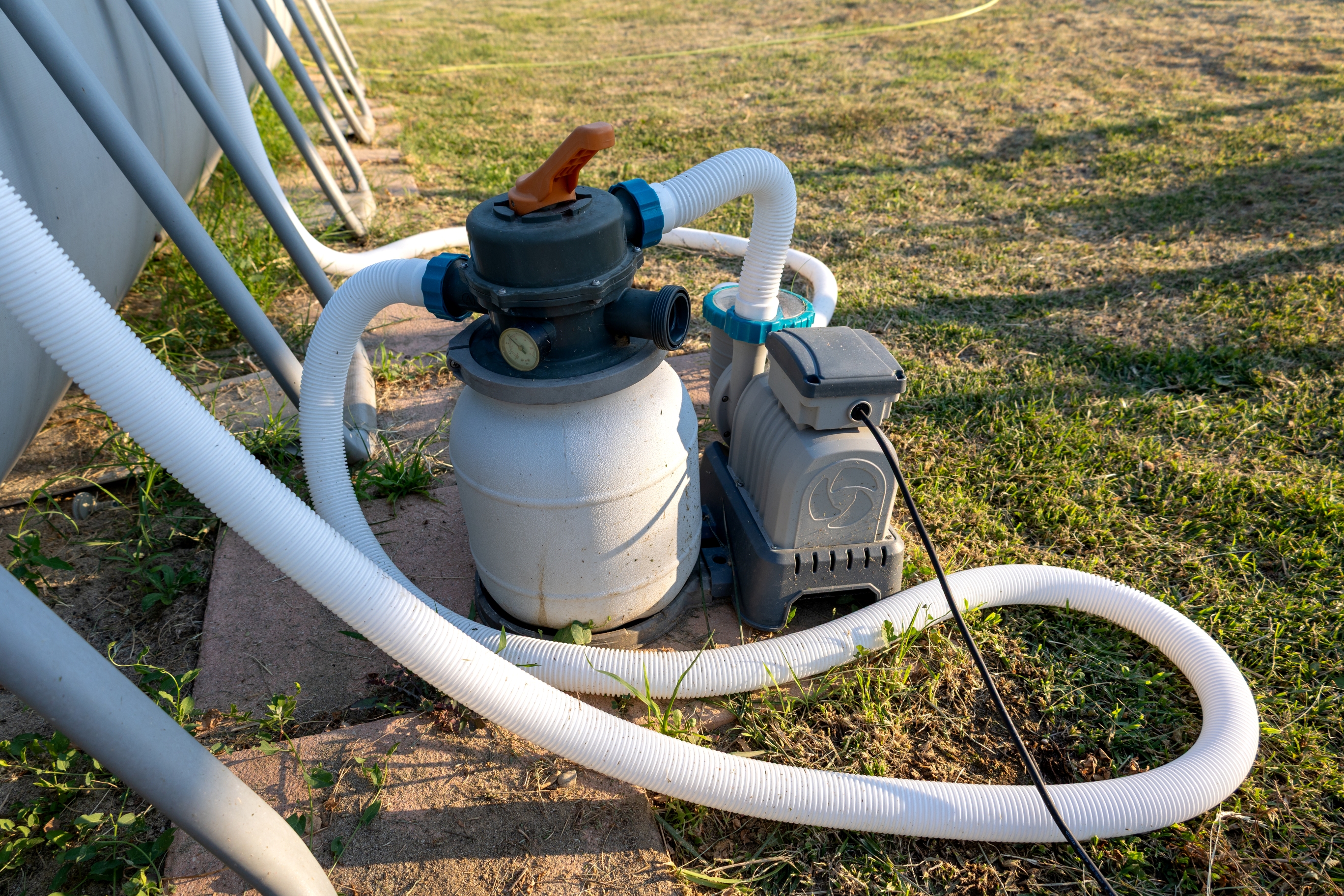
If freezing temperatures are expected, remove water from the pool's hoses, pump, filter, and other equipment according to manufacturer's instructions.
Above ground pools can have different plumbing configurations, so the exact winterization process depends on your equipment. Disconnect the hoses and allow them to drain completely, then clean and dry them before storing them in a protected location.
Never leave water trapped inside equipment or plumbing that is not designed to withstand freezing temperatures.
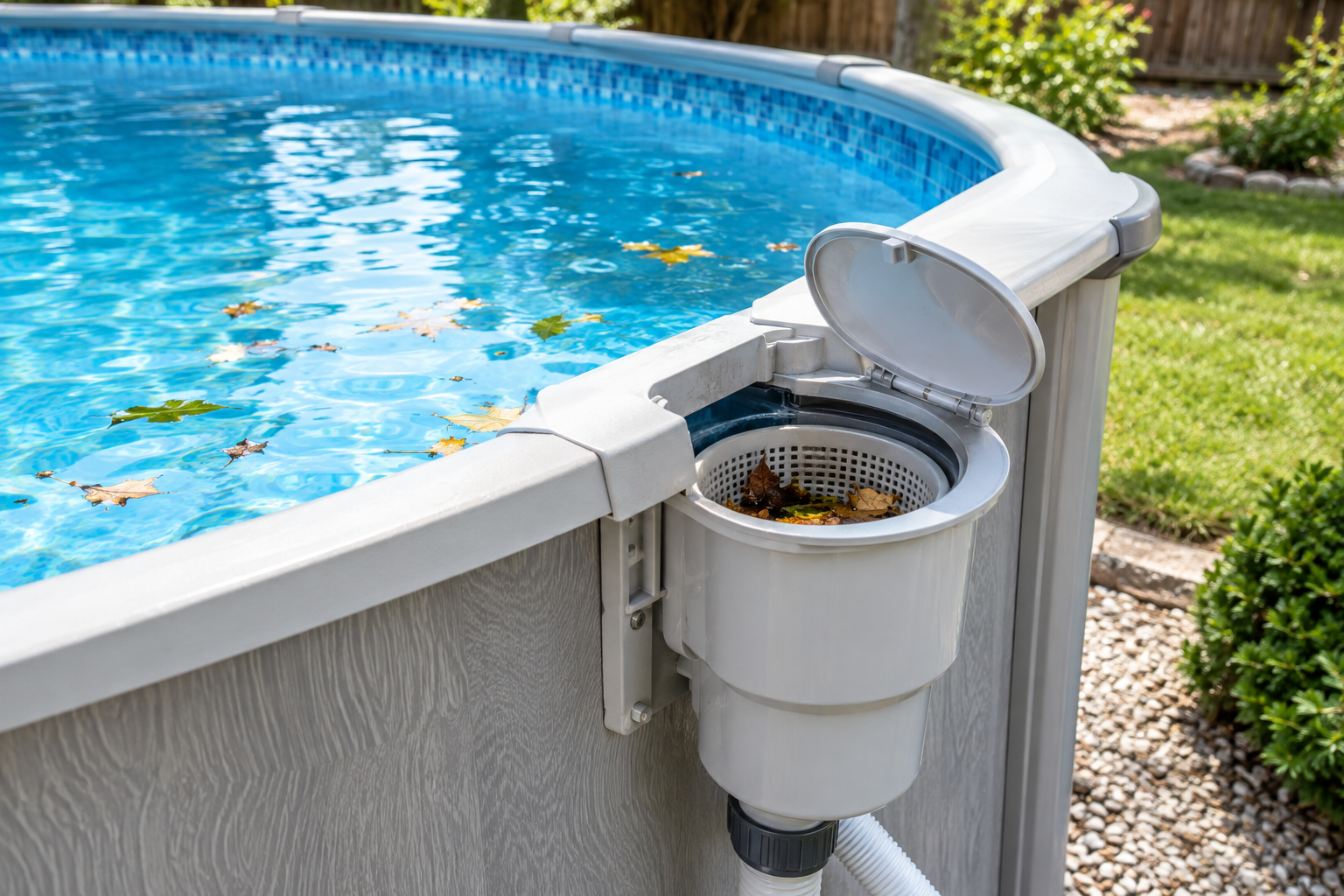
Remove the skimmer basket and follow your skimmer manufacturer's instructions for winterization.
Depending on your skimmer and winterizing setup, you may need to use a winterizing plate or another approved method to prevent water from entering the skimmer and plumbing. Some systems require the water level to be lowered below the skimmer instead.
Do not improvise with plugs and fittings. Use the winterizing accessories designed for your specific skimmer and follow the manufacturer's instructions.
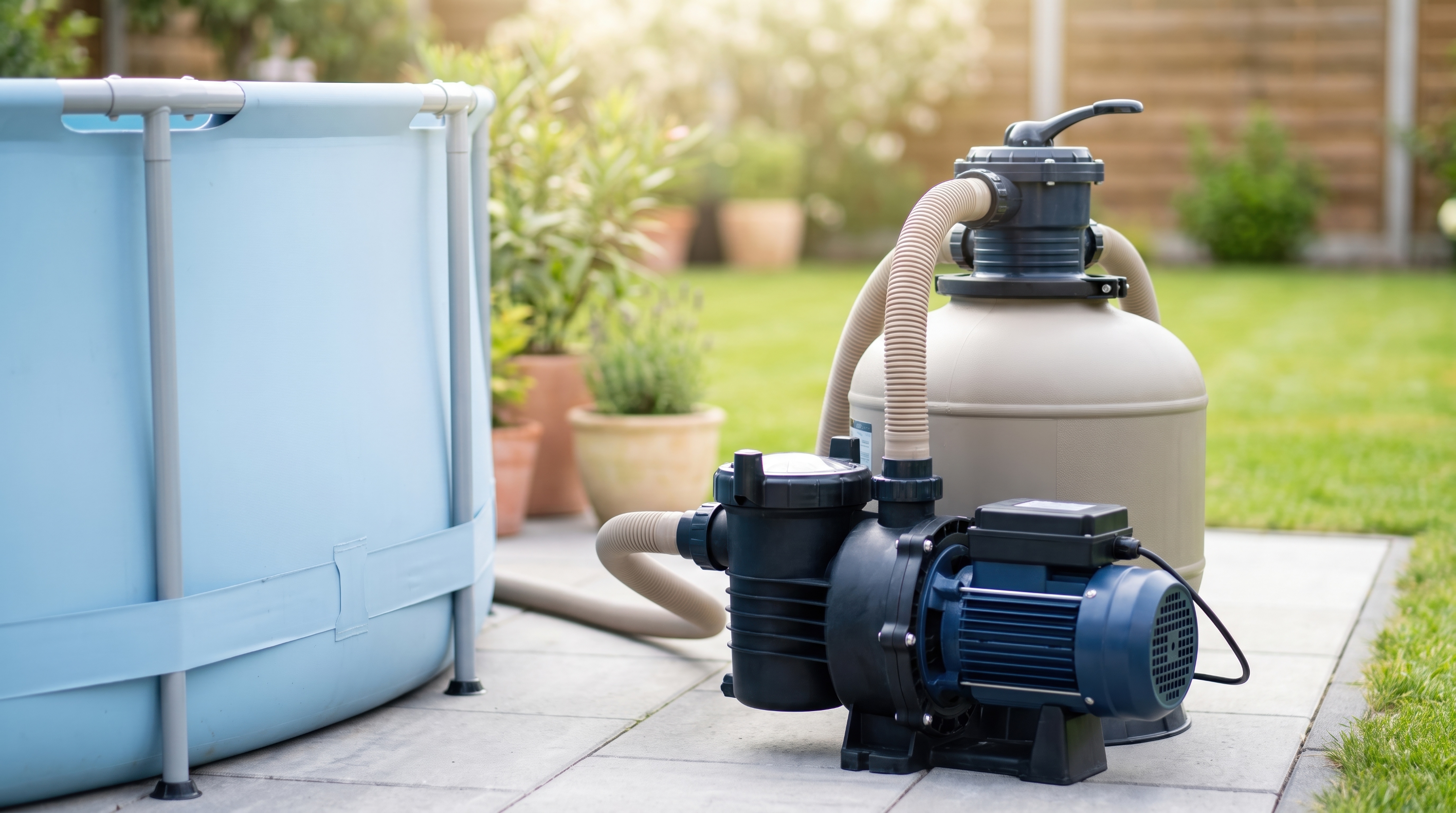
Moving your hardware indoors after you disconnect it is the best way to protect it from freezing temperatures. However, this may not be possible with all of your equipment, so make sure that you remove all of the water from it before freezing temperatures arrive. If you do choose to leave your pump and filter outside, cover it with an appropriate cover to prevent critters from moving in during the winter.
Remove all of the drain plugs from your pool pump, your chlorinator, and all of the hoses. It's a good idea to keep all the drain plugs in your pump basket together so they're easy to find in the spring. Keep your pump, chlorinator, and hoses indoors to protect them from the elements outside.
Depending on the size and shape of your filter and how much storage space you have, you may be able to bring it inside over the winter. Each style of filter requires different steps to properly winterize and prevent costly damage when your filter isn't running.
Set your multiport valve to Winterize and remove the drain plug at the bottom, allowing the filter to drain completely. If your multiport valve has a bleeder valve or a sight glass, remove them too and store them in your pump basket so you know where to find them next season.
If you can, bring your filter inside to store during the winter. If the weight of the sand or the size of the filter makes this too difficult, you can leave it outside, provided that you remove all of the drain plugs. If all the plugs are removed, freezing water or condensation inside the filter won't crack the tank.
Drain the filter, and then rinse off all of the grids (or fingers) with a hose to remove excess D.E. Leave the valves open over the winter period.
Drain the filter, then rinse the cartridge with a hose. Leave the valves open and store the cartridge inside throughout the winter.
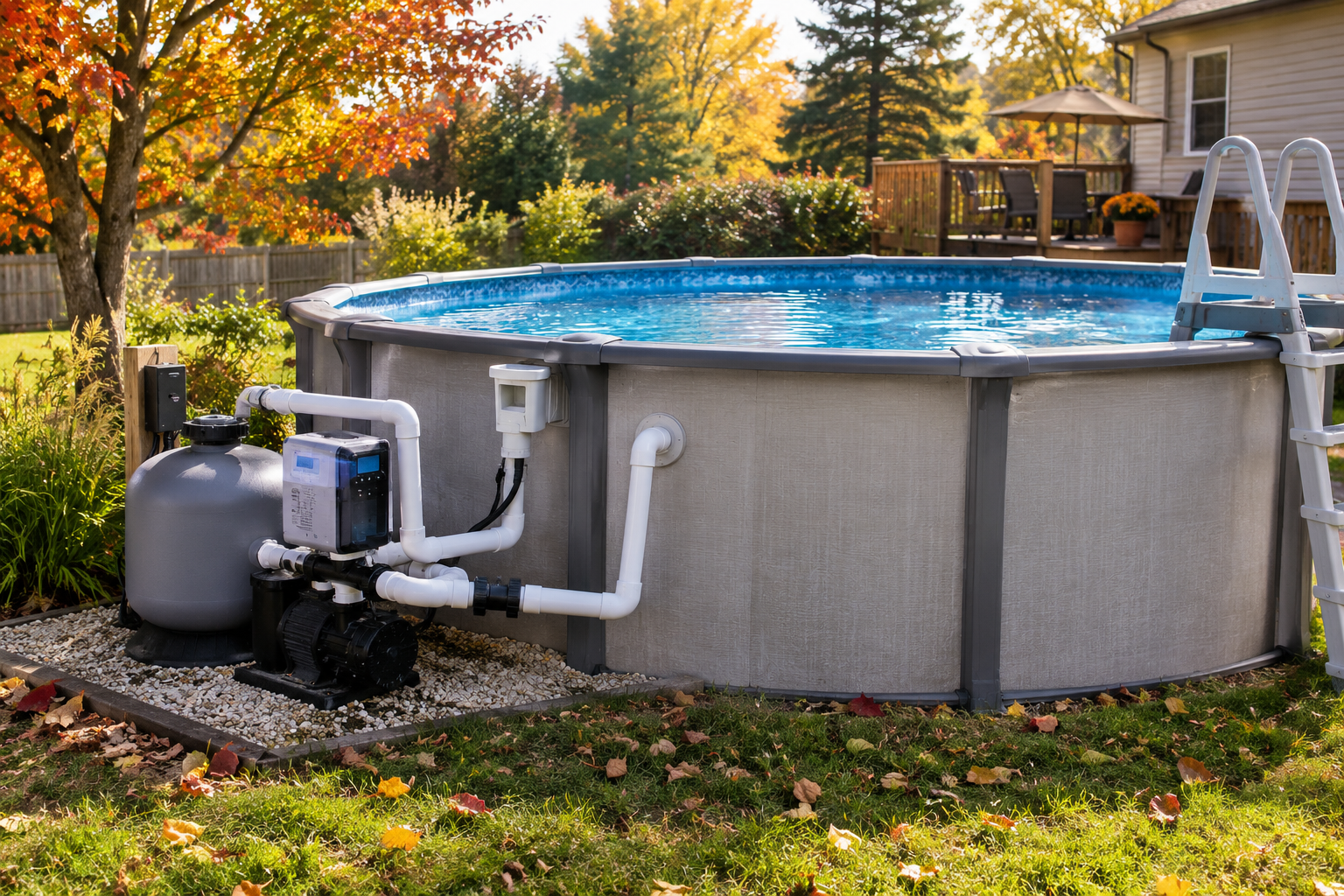
If you have a saltwater pool, then switch the chlorine generator to the "winter" setting if it has one. If not, most saltwater generators have a removable electrolytic cell, which can be access by unscrewing the end caps. Remove either the cell or the entire saltwater system, and store it inside during the winter. Now is also a great time to clean out the cell before you store it, prolonging its life and reducing the risk of hardware problems.
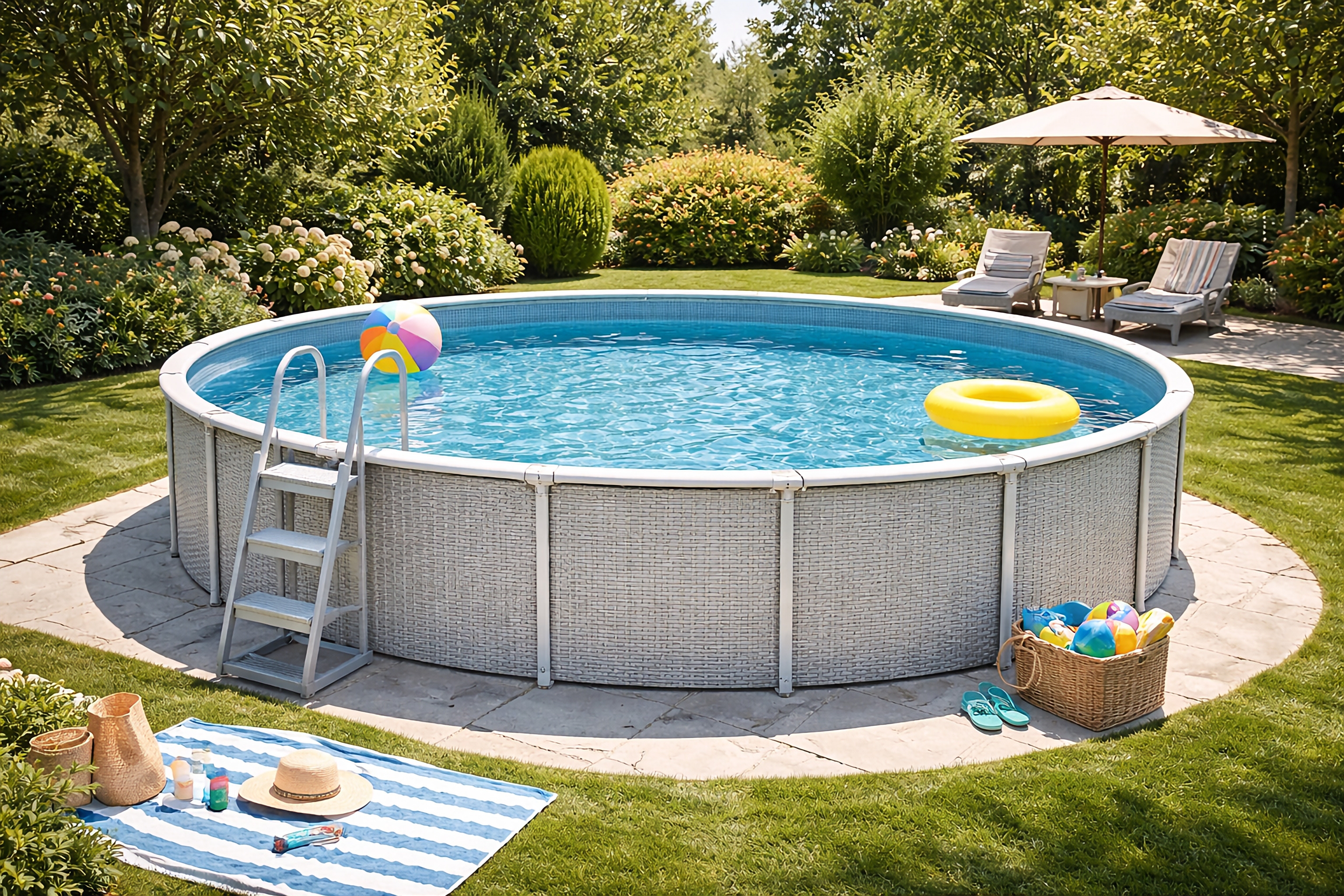
Take the time to remove any ladders, toys, fountains, or other detachable accessories connected to your pool to prevent damage to them and your pool. Left over winter, they may puncture the liner or start to rust, contaminating your water.
Once you've removed all of your accessories, wash them with a multi purpose cleaner. Let them dry thoroughly to prevent the risk of mold growing before storing them in a clean, dry place over the winter.
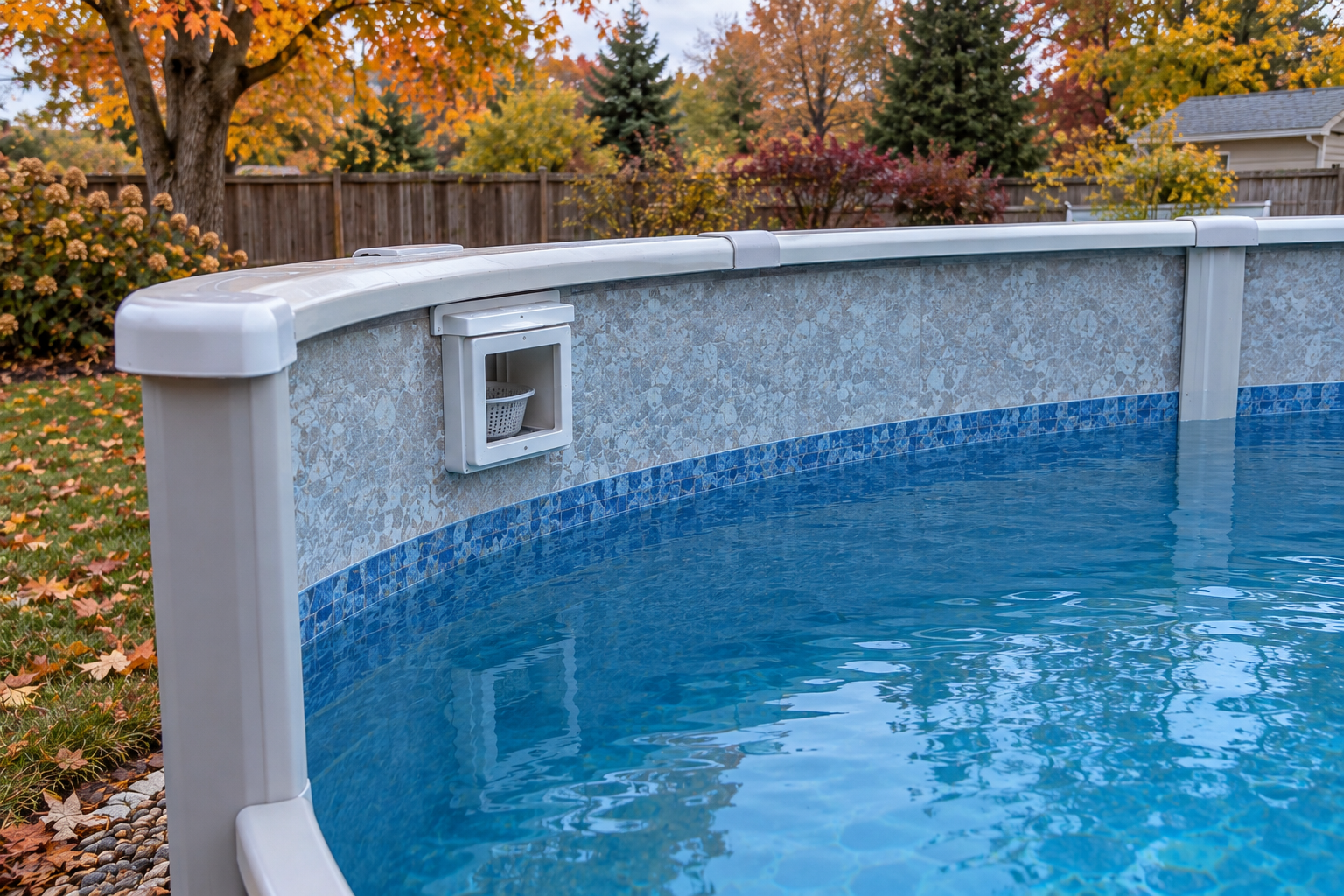
This depends on whether you choose to use a skimmer plate in step seven. If you're not using a skimmer plate and your area is likely to freeze over the winter, you should drain your pool water below the skimmer and returns.
If you're using a winter skimmer plate, then remove the hose from your skimmer so it can drain properly before installing the plate. Winterizing plates are a great option if you're using a solid winter cover. Plates don't require you to drain your pool, allowing the cover to rest on the water's surface. This helps to reduce the pressure from rain or snow collecting on top of your winter cover.
Keep in mind that you should never completely drain your above ground pool, especially when winterizing. Your vinyl liner will dry out and crack, or the pool walls could collapse without the pressure to hold them together.
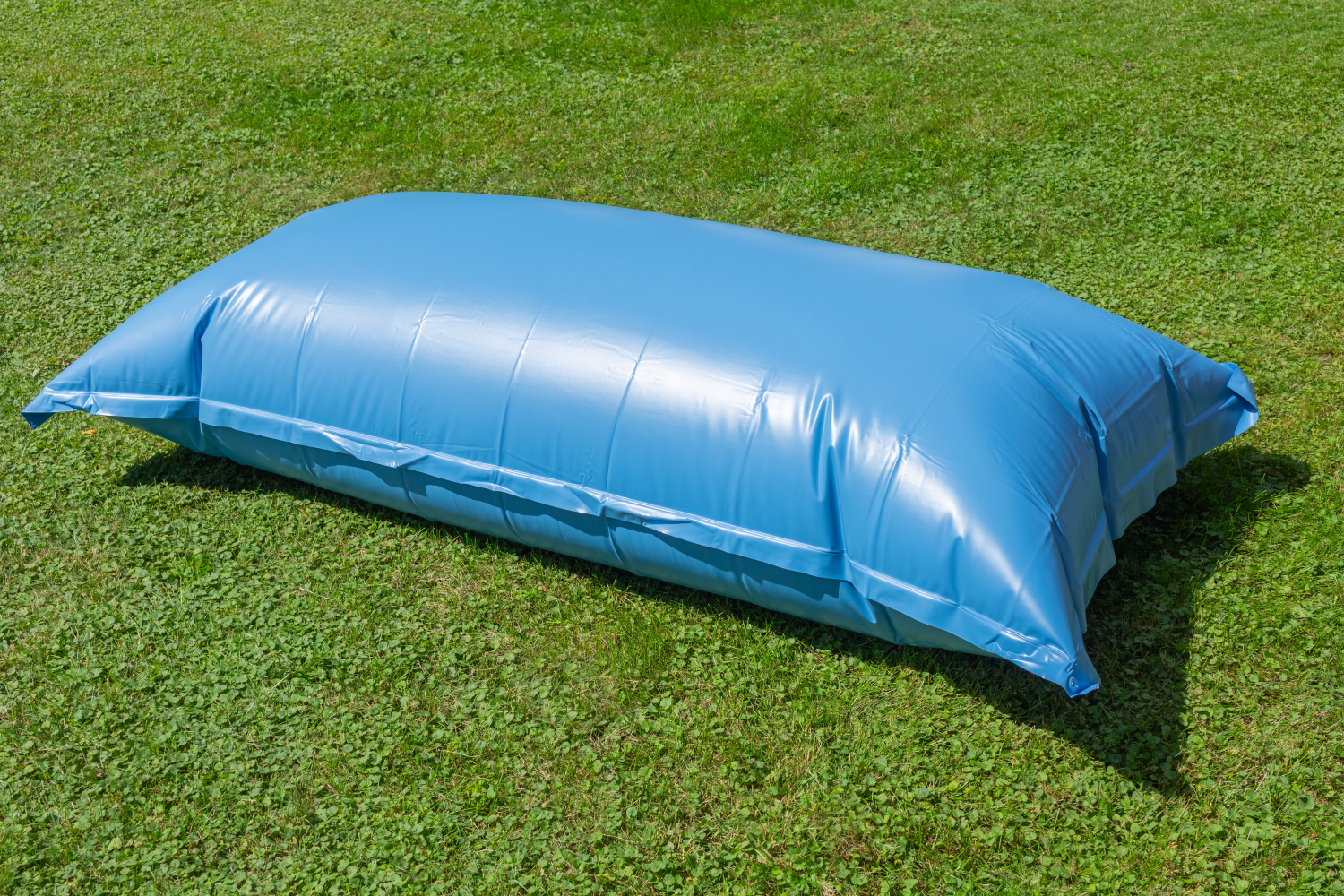
This is especially important in colder climates. By placing an air pillow under your cover, you protect the cover itself, as well as the walls of your pool, from damage. Air pillows can also help keep water and debris at the side of your pool, away from the center, making cleanup easier come spring.
Inflate the pillow to around 50% or 60% of its full capacity, so it compresses without popping after the first substantial snowfall. Then place your air pillow in the middle of your pool. You can use a rope to secure it to either side of your pool or a pillow pal, ensuring it stays centered and provides additional protection for your pool cover and walls.
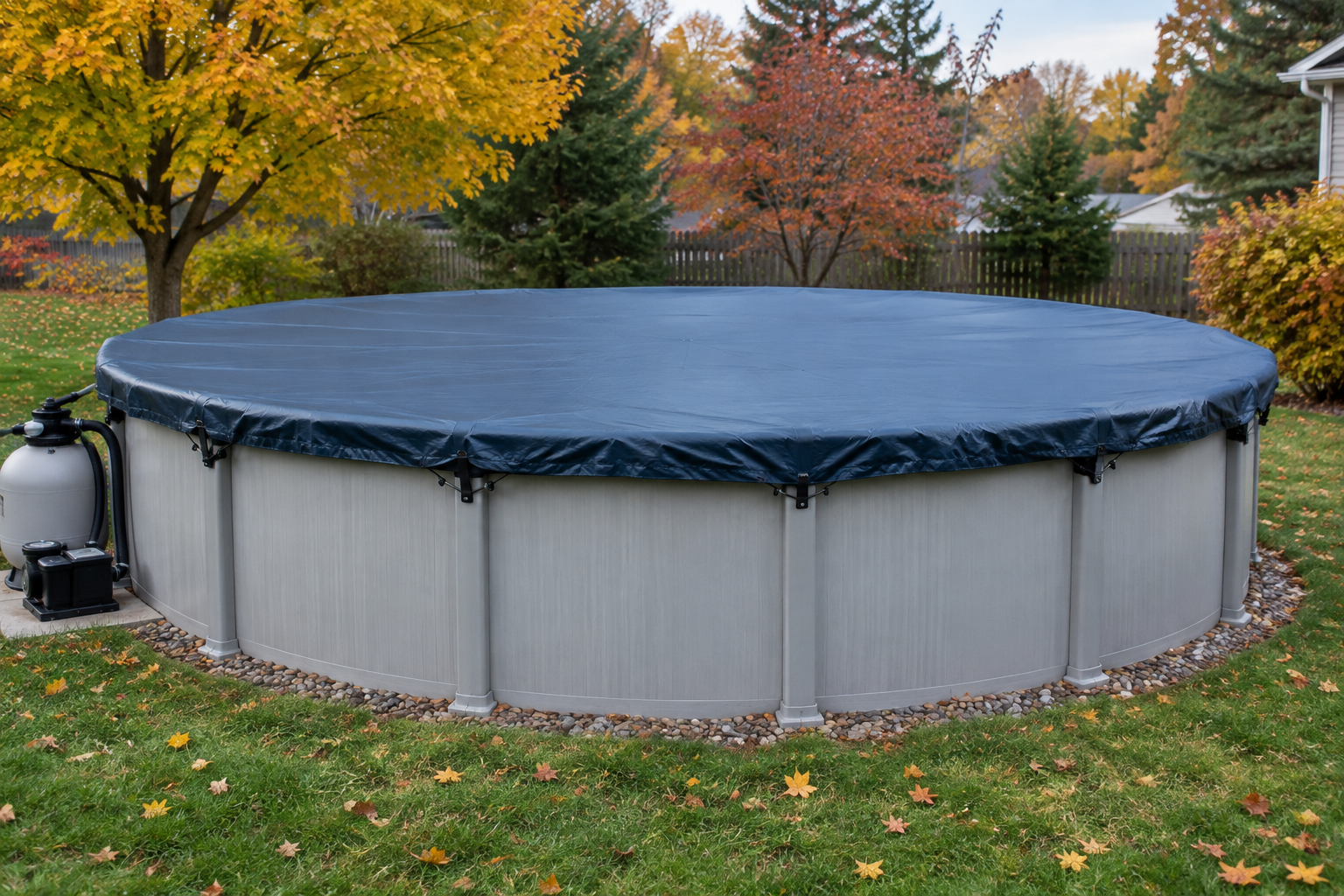
Place your winter cover over the pool and the air pillow, securing it with a cable and winch or adding winter cover clips. If you have a walk-around deck around your pool, you can use water bags to help support your cover.
Throughout the winter, try to stop excess water and snow from accumulating on your cover. You can brush off snow with a regular broom (not anything sharp like a shovel or a rake), and a cover pump will help remove any excess water.
In areas with freezing winters, you should generally close your above ground pool before sustained freezing temperatures arrive. Many pool owners begin the closing process when the water temperature consistently reaches around 60°F - 65°F. However, local weather conditions, your pool manufacturer's recommendations, and your equipment should determine the best time to close your pool.
No. You generally should not completely drain an above ground pool unless the manufacturer specifically instructs you to.
The water helps support the pool structure and liner. Completely draining some above ground pools can cause the liner to shrink, dry out or crack, while reducing the pressure can put additional stress on the pool walls.
Instead, lower the water only as much as your pool, skimmer, and winter cover manufacturer recommends.
An air pillow may be recommended for some above ground pools, particularly in areas that experience freezing temperatures. It sits between the winter cover and can help reduce pressure on the pool walls and create a space for ice to expand. However, air pillows aren't appropriate or required for every pool, so follow the recommendations for your specific pool and winter cover. We recommend using an air pillow for all mesh covers.
Failing to winterize an above ground pool can lead to algae growth, dirty water, damaged equipment, and freeze-related plumbing problems. Freezing water can expand inside hoses, pumps, filters, and other components, potentially causing cracks or other damage.
Winter weather can also stress the pool structure and cover, and in the worst case, your entire pool can collapse. Properly preparing the water, plumbing, equipment, and cover before freezing temperatures arrive can help reduce the risk of costly damage and make spring opening easier.
Yes. Shocking the pool is commonly part of the closing process because it helps address contaminants and algae before the pool is covered for winter. Always follow the shock product's label instructions for the correct dosage and application, and address any existing algae or water quality problems before closing the pool.
If you don't want to add chlorine to your pool before closing it, consider using an Rx Clear® Non-Chlorine Winterizing Kit.
Many pool owners add a winter algaecide as part of their closing routine. The appropriate product, dosage, and application timing depend on the specific algaecide and your pool's water conditions. Always follow the product label and avoid exceeding the recommended dosage.
You should probably clean, drain, and winterize your filter before freezing temperatures arrive. The exact process depends on whether you have a sand, cartridge, or D.E. filter. Follow the filter manufacturer's directions to determine whether to remove, drain, clean, or store the filter indoors for winter.


