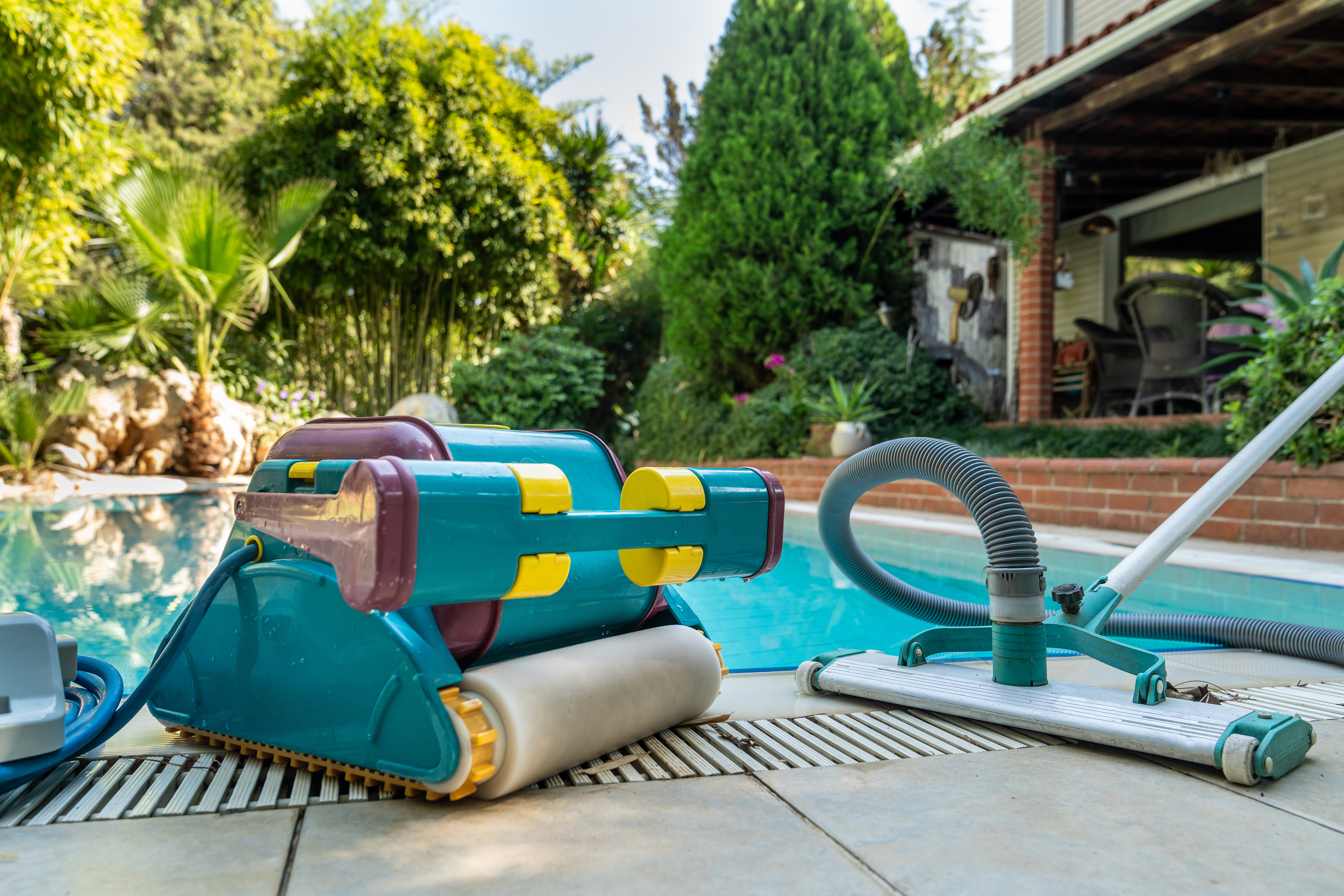
No one wants to swim in dirty water. Not only can a dirty pool ruin a pool day, but it can also lead to increased algae blooms and foggy water. Too much dirt in a pool can even affect the chemical levels of a meticulously balanced pool.
Vacuuming is as standard to pool upkeep as chlorine and skimming, but the time-consuming process is often ignored until the last minute. Some pool owners admit they only vacuum their pool once or twice a month, but not vacuuming frequently can lead to more issues down the road.
But it’s not just about vacuuming your pool floor. If you don’t vacuum right, you can end up with just as much dirt on the bottom of your pool as when you started. Vacuuming the wrong way can also damage your liner or filter. With the proper techniques – and the right equipment – it’s easy to get your pool sparkling clean in no time.
Pools should be vacuumed at least once a week to avoid build-ups of dirt or staining from regular pool debris. But your pool may need to be cleaned more, depending on how often it's used or where your pool is located.
Pools in wooded areas will need to be vacuumed more often. Leaves can clog your filter while you’re cleaning, so always be sure to check your filter and vacuum debris bag (if applicable) while you work.
Your pool should also be vacuumed after heavy storms. Removing any extra twigs, leaves, and debris from your pool can improve your water quality and reduce strain on your filter.
If you winterize your pool, vacuuming before closing can reduce the chances of large algae build-ups and make spring cleanup easier.
There are two basic categories of pool vacuums: Manual and Automatic Cleaners. Each style has a multitude of options to choose from, each with its benefits.
When you think of vacuuming your pool, the first thing that probably pops into your head is the standard, weighted vacuum heads covered in bristles. Since the first early recognizable vacuum cleaner head patent was filed in 1937, not much has changed about these cleaners, but that doesn’t take away from their effectiveness.
For many people who want a more hands-on approach to cleaning, a vacuum head and pole will always be the way to go. Manual vacuuming allows you to check your pool while you work and focus on specific problem areas, or floating debris.
For smaller pools, spas, and soft-sided pools, battery powered pool brooms are a convenient choice. These smaller, self-contained cleaners have their own debris baskets attached and pass water through their filters to clean. While these manual cleaners are effective, they aren’t recommended for larger pools.
Automatic cleaners are an ideal alternative to traditional pool vacuuming. Automatic cleaners run without the need to watch or participate in the cleaning process. Automatic cleaners can be attached to your skimmer and filter system, but many have attached debris bags that clean your water without having to be attached to your pool’s filter. This saves your filter from the extra wear and tear and from becoming clogged with the added debris.
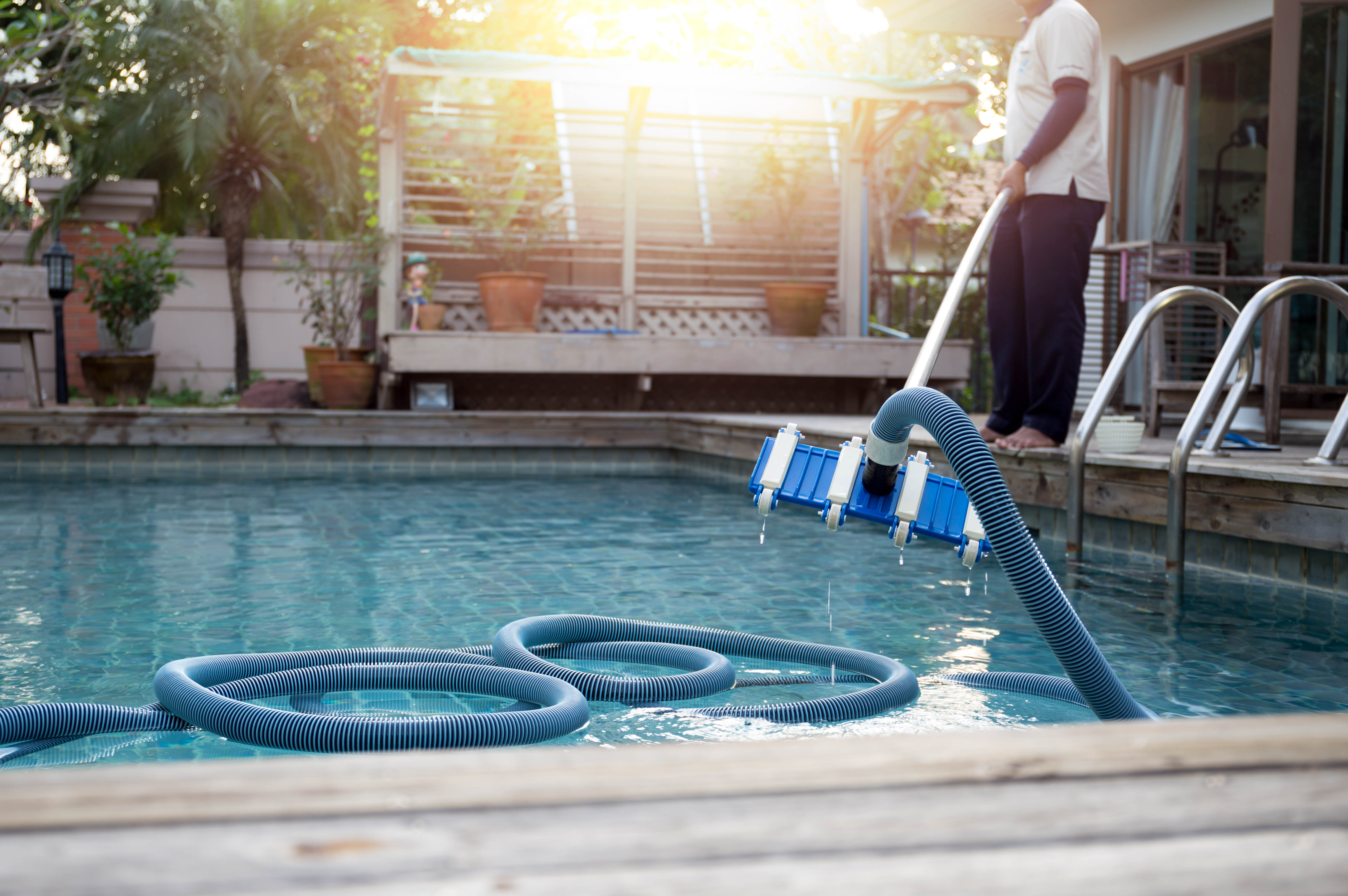
To manually vacuum your pool, you’ll need:
To start, set up your vacuum. Attach the vacuum hose and telescoping pole to your vacuum head and make sure they click into place. If they don’t click, you may need to replace the vacuum head pin.
Next, it’s time to prepare the skimmer. Make sure to turn the filter system off and empty the skimmer basket. If needed, rinse the skimmer basket off using a garden hose. You’ll want to make sure everything is as clean as possible before you start vacuuming.
After the prep work is done, it’s time to insert the vacuum into the pool. Lay your vacuum hose as straight as possible and slowly dunk the vacuum head into the pool.
Allow water to fill both the head and the hose as you move the head towards the bottom of the pool. You can also hold your vacuum hose over the return nozzle to fill it with water. When water begins coming out of the other side of the hose, carefully place it into the skimmer intake.
Now, set the filter to WASTE and turn it back on. You’re now ready to start cleaning.
Using the telescoping pole to help you steer, pass the vacuum head slowly over the bottom of the pool. Try to keep each stroke as long as possible and keep track of where you’ve already been. Moving slowly also stops small water currents from forming and lifting the dirt off of the bottom of the pool.
While you work, listen to your filter to make sure it’s not straining or struggling. If the sound of the filter changes, turn it off and inspect it before you continue vacuuming.
When you’re finished vacuuming, lift your vacuum head out of the pool before turning the filter off. Then, when the head reaches the surface, turn off the filter and remove your hose. Disconnect the vacuum from the head and hose and place it in a good spot where it can dry completely. This reduces the chances of mold and mildew growing in the vacuum. When dried, the vacuum can be safely stored.
Make sure to clean your filter basket before returning your settings to their regular state. You’ll want to make sure everything is back in order before turning your filter back on.
For more information about manual vacuum cleaners and to get some of your questions answered in our FAQ.
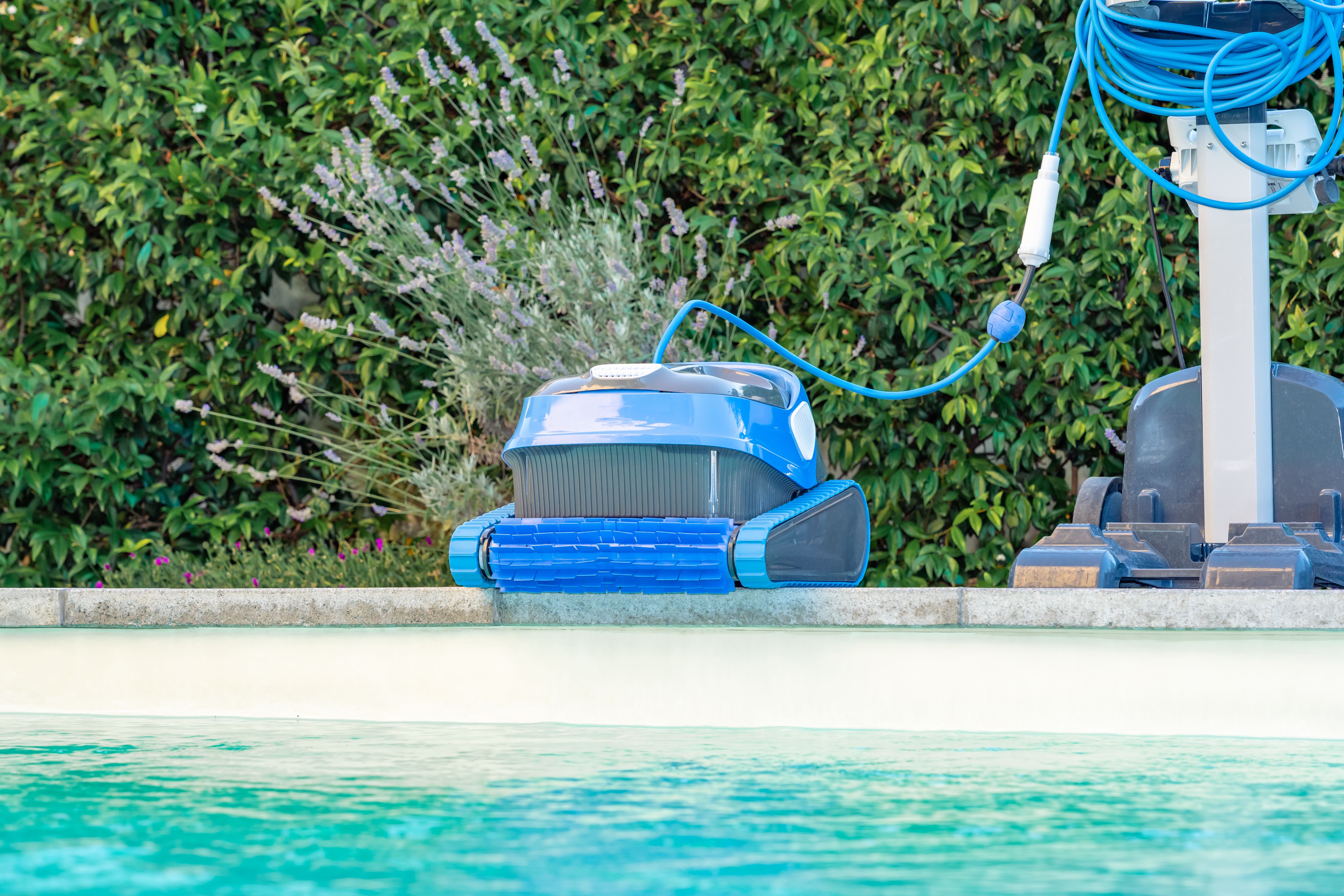
Depending on which automatic cleaner you choose, the setup will be slightly different. To understand precisely how to set up your particular automatic cleaner, be sure to follow the detailed instructions in the cleaner’s manual.
Most automatic cleaners, though, follow a similar basic setup routine and have similar needs. To run your cleaner, you will most likely need:
Your cleaner will need to be plugged into a grounded outlet using the included waterproof cable. Make sure the outlet you’ve chosen is far enough away from your pool to avoid getting wet, but close enough so the cable will not strain.
Some cleaners have a hose set up and will need to be attached to your pool’s filter, while others rely on a large debris basket built directly into the cleaner itself.
Most cleaners come with one to two programmable cycles to suit your needs. These cycles often vary in length or the type of cleaning. Turn your cleaner on and choose the cycle that best matches your needs.
When the cleaner is programmed, place it in your pool. If your cleaner doesn’t sink immediately, you may need to push your cleaner down gently.
Automatic cleaners don’t need to be monitored, but you may want to check in on it while it’s working to make sure everything is running as it should.
If you notice your cleaner has stopped before its cycle has finished, it may be clogged. Simply remove your cleaner from your pool, clean the filter, and set it right back to cleaning.
When your cleaning is completely done, remove it from your pool and allow it to drain. If your cleaner has an included debris bag, empty the bag and clean it before reattaching. Then, dry your cleaner and put it away until you need it again.
For more information about manual vacuum cleaners and to get some of your questions answered in our FAQ.


