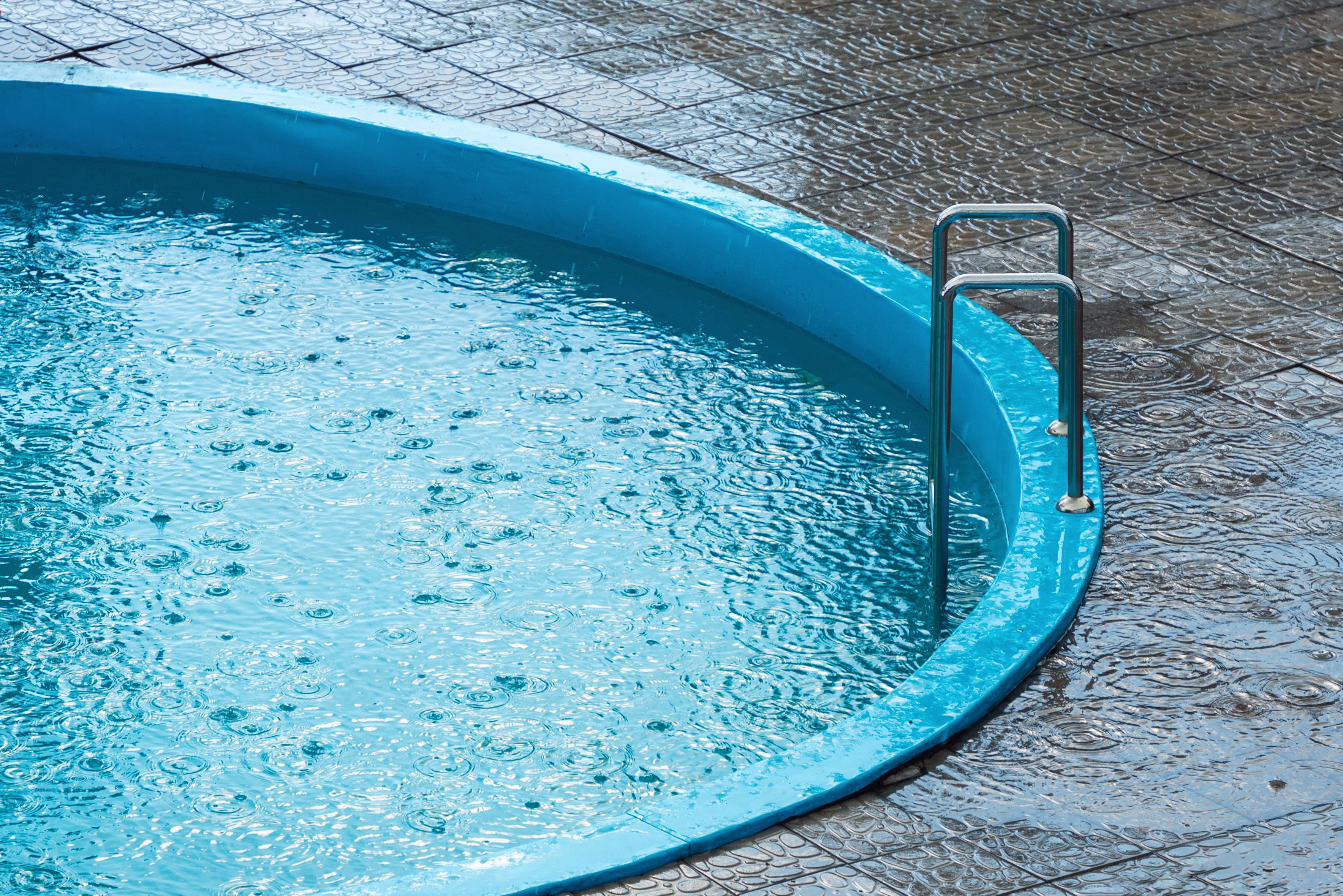
The weather report is predicting a strong, heavy storm for today, which means it’s time to close your windows and protect any outdoor furniture. But your home isn’t the only thing that needs protection. To keep your pool well maintained, taking care of your pool before and after the storm is paramount.
Protecting your pool during a storm is all about timing. But, by following these steps below, you can get back to swimming when the storm passes and the skies are blue.
Just because the weather is predicting a storm doesn’t mean you need to run to storm preparations right away. A small amount of rain isn’t going to have a substantial effect on your pool and may just require you to do some light testing and adjusting after the rain passes.
While there can be some extenuating factors (i.e. acid rain, rain with a lot of organic contamination, etc.), rains of between 1- 3 inches will have little effect on your pool water chemistry.
Larger pools will also feel less of an effect from rainwater. Since there’s more water and more space, a large, balanced pool might not even need the extra look.
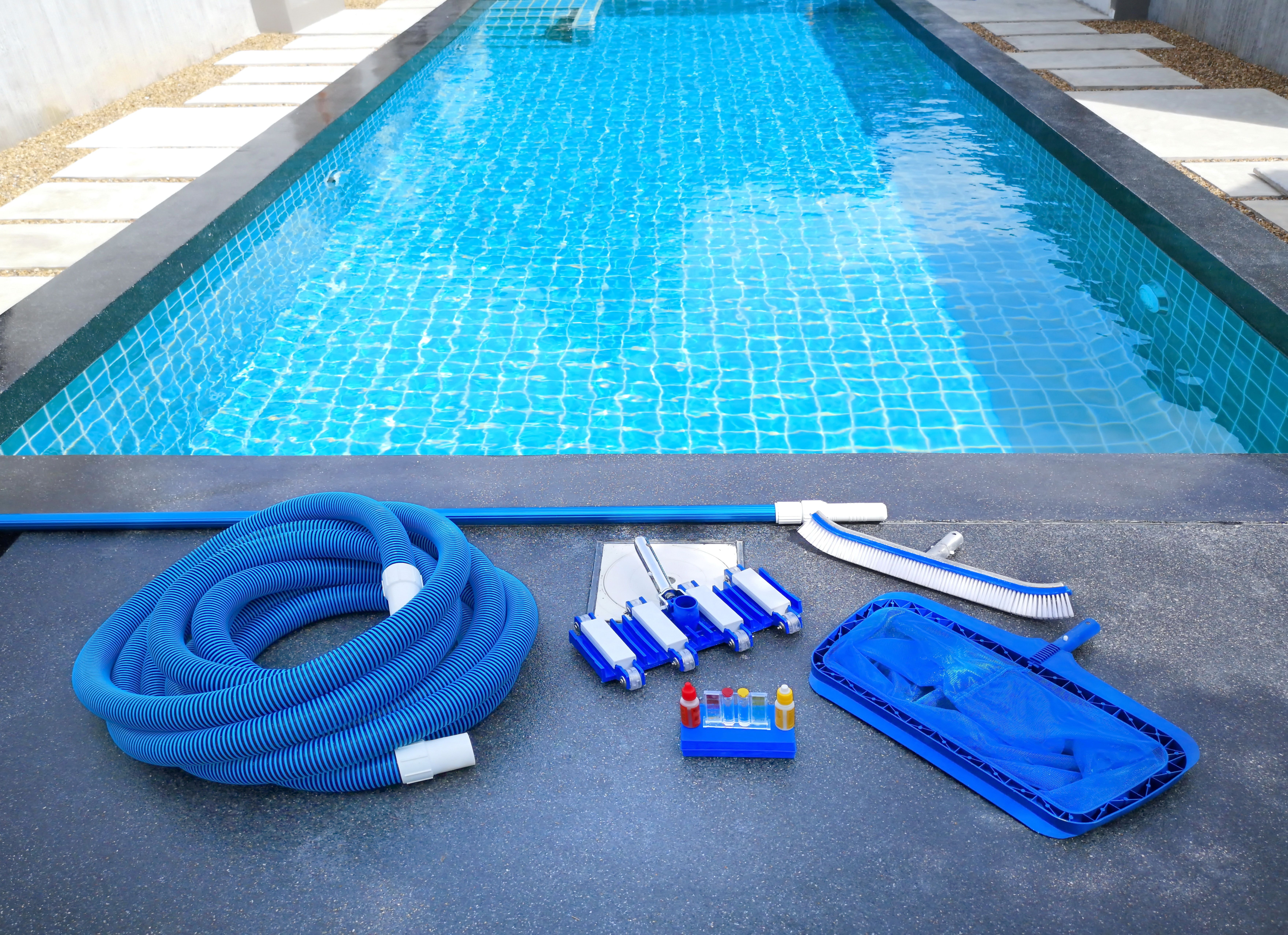
Before the first raindrop falls, you’ll want to prep your pool. Storm prep is just as important as the cleanup after, and can significantly reduce the amount of work you need to do later. Only follow these steps while it’s safe to do so. When the weather turns, head back to safety.
Balancing your pool is a task that needs to be done all season long, but you’ll want to take extra care to balance before a storm. This is to help reduce the chances of contaminated water entering your pool and causing damage to your liner and equipment.
While you can add a bit more chlorine than usual, or even shock your pool before the storm comes, avoid adding too much chlorine. Just like contaminated water, too heavily chlorinated water can also damage your pool liner and equipment.
As the storm might bring a lot of debris and extra water into your pool, algaecide can help stop a large algae bloom of algae from growing. While this isn’t necessary, an algaecide can help make your cleanup after the storm passes a lot easier.
Turning off your electrical pool equipment is an essential part of storm prep. Turn off the circuit breaker to the pool, ensuring no electricity is going to the equipment. If you can’t, check that all of your equipment is completely off.
If you have a gas-powered heater, make sure it’s off and no gas is flowing. Ensure everything is as secure as you can, with no switches or valves being loose.
While you’ll have to leave most of your equipment out, protect your equipment the best you can. Some equipment, like heaters, have covers designed for them. If your equipment doesn’t have its cover, try covering it with a tarp carefully secured.
While you’ll want your equipment covered, don’t cover your pool. Pool covers are tough, but they can be easily damaged by large sticks or other debris falling on top of them. Instead of covering your pool, leave it open and monitor your water level.
While it may be tempting, never completely drain your pool; instead, lower your water level by one to two feet and monitor your pool throughout the storm. If you see the water level rising too high, you may want to slightly drain your pool again when it’s safe to do so.
A completely drained pool, especially an inground pool, may create larger problems. Above ground pools rely on water to keep their structure, and draining can lead to a damaged liner. For inground pools, the ground around the pool may become saturated with water. The saturated ground can create pressure around the pool, eventually causing it to pop out.
Leaving some water in the pool can also help reduce the chances of contamination taking over your pool.
Check around your pool for any loose chairs, toys, umbrellas, or equipment. All of this will need to be put away somewhere safe so it won’t blow away. For equipment that can’t be put away, tie it carefully to something secure to make sure it doesn’t blow into your pool or against your house.
Make sure to screw in your skimmer lid. If you can’t screw it down, put it somewhere safe so it doesn’t fly off during the storm.
If there’s additional time before the storm, trimming nearby limbs and trees can reduce the amount of cleanup you need to do after the storm. Tree limbs can fall into your pool and damage your liner or cause further damage down the line.
Leaves and other debris can be easily removed after the storm, but cleaning up as best you can reduces the chances of water contamination from organic materials.
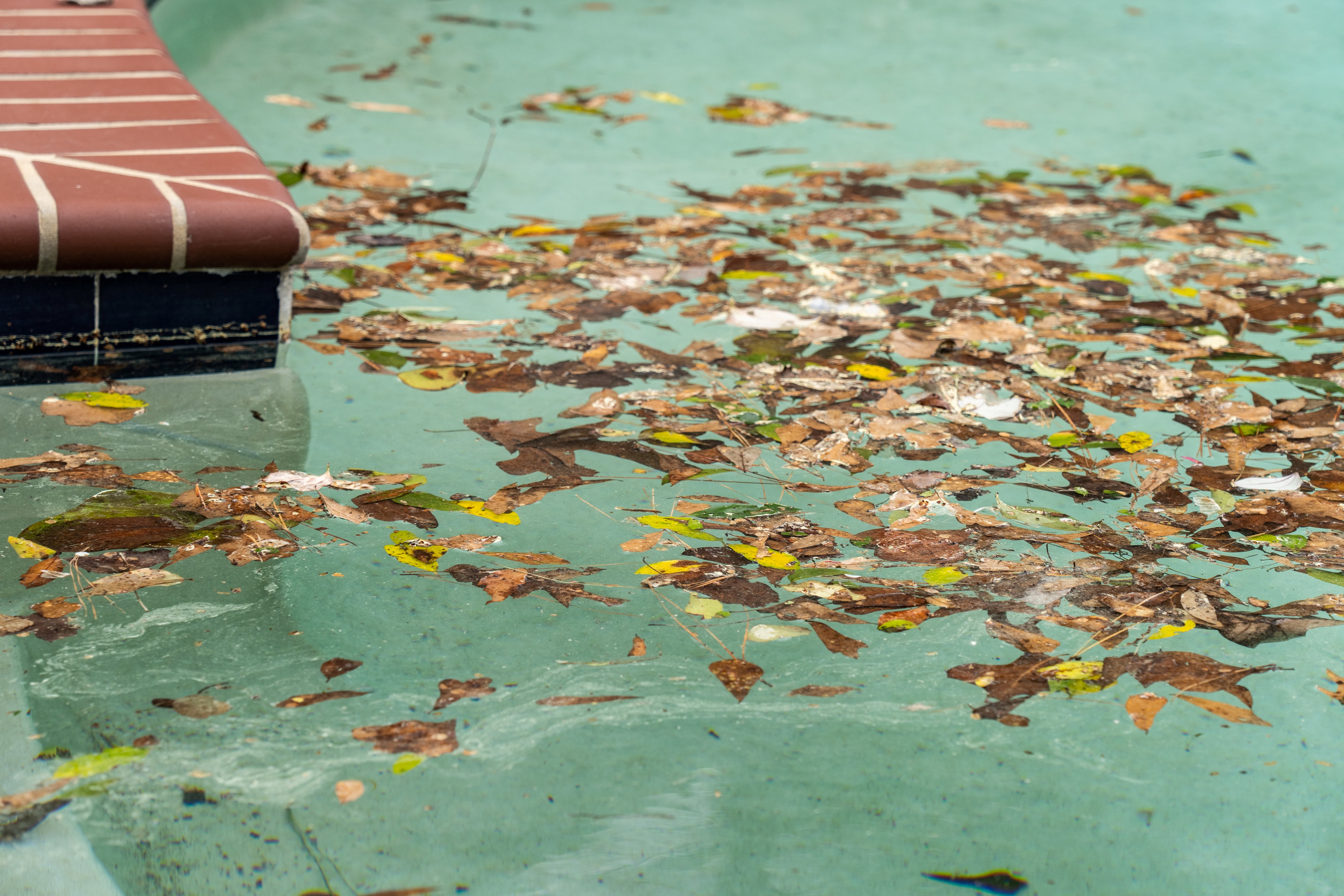
Pool cleanup can be time consuming, depending on what kind of storm hits you, but if you take care before the storm, it can be easier.
While this seems like the most basic step, it is one of the most important. Clear any twigs, branches, leaves, and other debris from your pool. The more debris you can remove, the less work your skimmer needs to do and the less likely your skimmer is to become clogged.
Just like during your preparation, do not completely drain your pool. Even if the pool water looks dirty and like it should be drained, only partially drain it, allow the water to pass through the filter, refill, and then drain again. This should help you get your water cleared without damaging your pool structure or liner.
After most of the debris is cleared, or as much as you can remove with your hands or skimmer, it’s time to check the chemical balance in your pool. If your pool was properly balanced before the storm hit, you might not have as much work to do now, but that doesn’t mean you shouldn’t check!
Using a chemical testing kit, double check where your levels are before adding additional chemicals to your pool. Put extra chlorine and algaecide into your pool to help clear any contaminants.
Before restarting your filter, inspect your equipment for damage. If you covered your equipment before the storm, make sure you remove the cover first. You’ll want to check for damage to any power cables, gas lines, and hoses.
If you see any damage, do not turn your filter on. If everything looks okay, try turning your filter and equipment on and listening for any changes in the way they sound.
If everything is running as it should, it's time to start your filter back up. Your filter may be running overtime, circulating the chlorinated water and filtering out any dirt or debris you can’t get out on your own. Depending on how bad your storm was, you may want to run your filter overnight, making sure to check on it periodically to make sure it’s not clogging.
If you hear a change in your filter or notice it’s not running as effectively as before, turn the filter off. Check the filter basket and make sure there are no blockages before turning the filter back on.
Remember, no matter what, your safety is key. Always wait for safe conditions before going out to check on your pool.


